
Duffel Bag vs Cabin Suitcase: Which Is Better for a Short Trip?

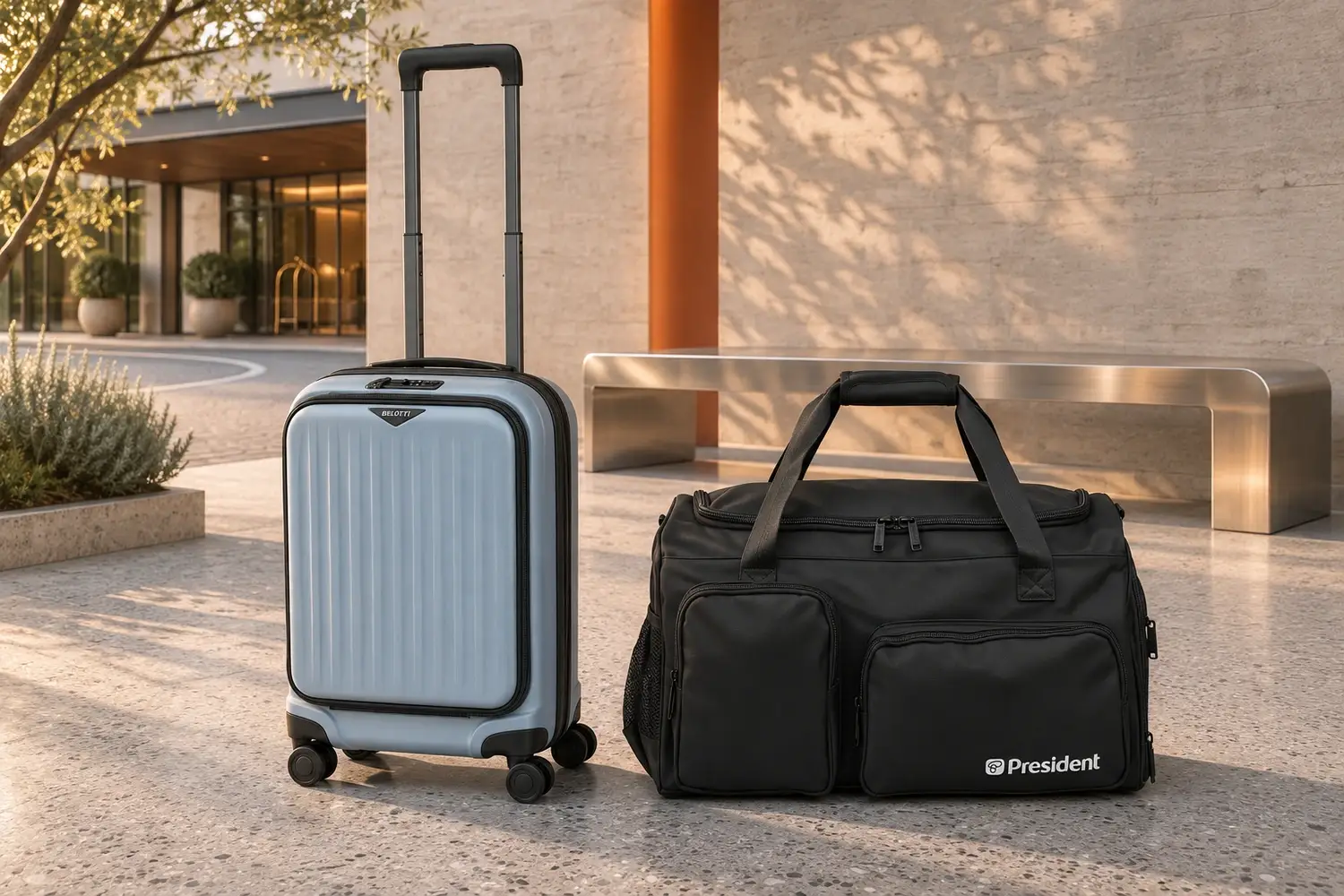
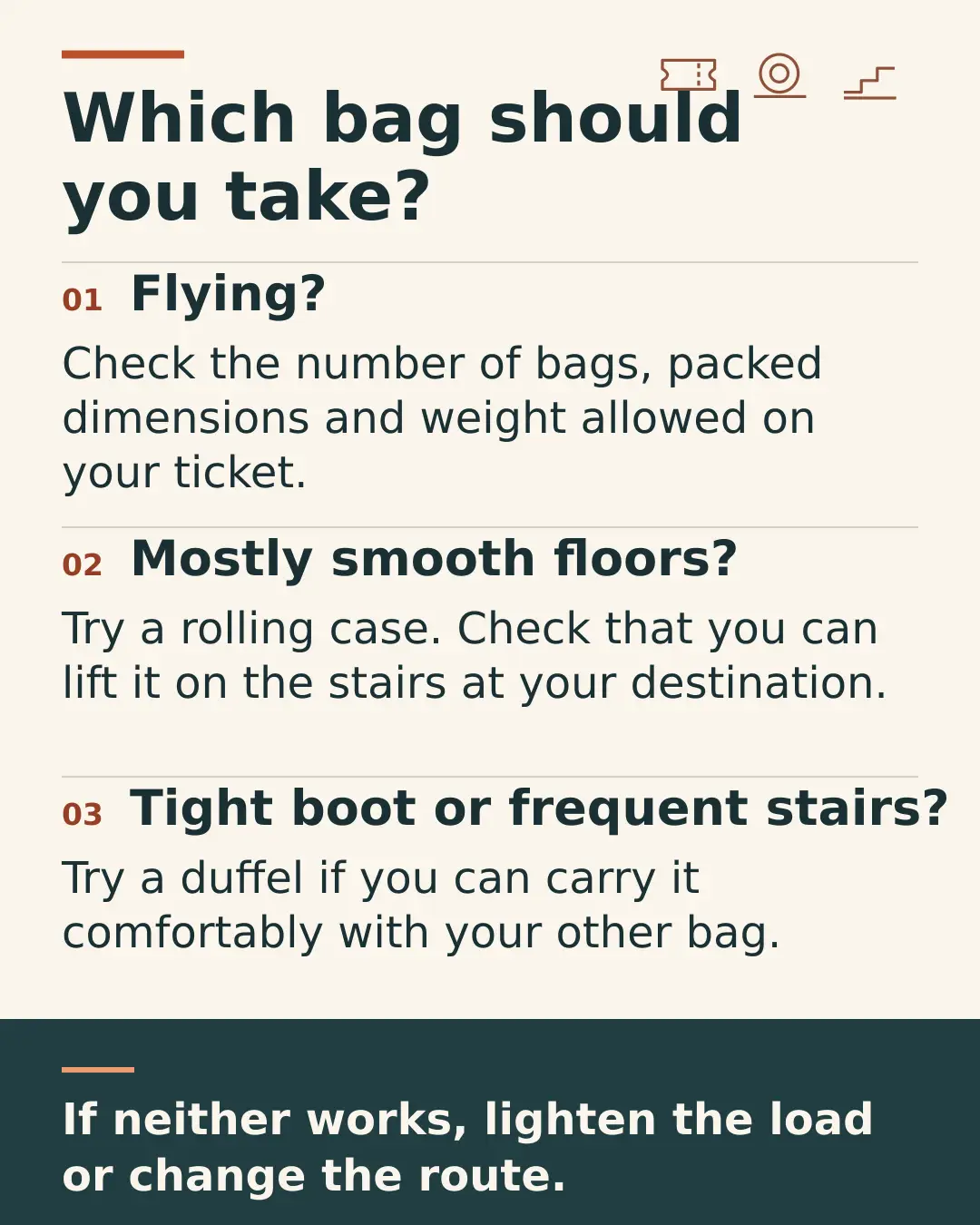
Duffel bag vs cabin suitcase: consider a lightly packed duffel for stairs, short transfers or an awkward car-boot gap if you can carry it comfortably. Consider a rolling suitcase if most of the journey is on smooth floors and you prefer not to carry the load on your shoulder. If you’re flying, rule out anything that exceeds your ticket allowance first.
Two nights away can mean a drive from Sharjah straight to a hotel reception, or a flight followed by a train change and three flights of stairs. You might pack the same clothes for both. What changes is how often you have to lift them. Here, “duffel” means a bag you carry by hand or shoulder, and “cabin suitcase” means a case on wheels. Either shape can be carry-on baggage if your booking allows it.
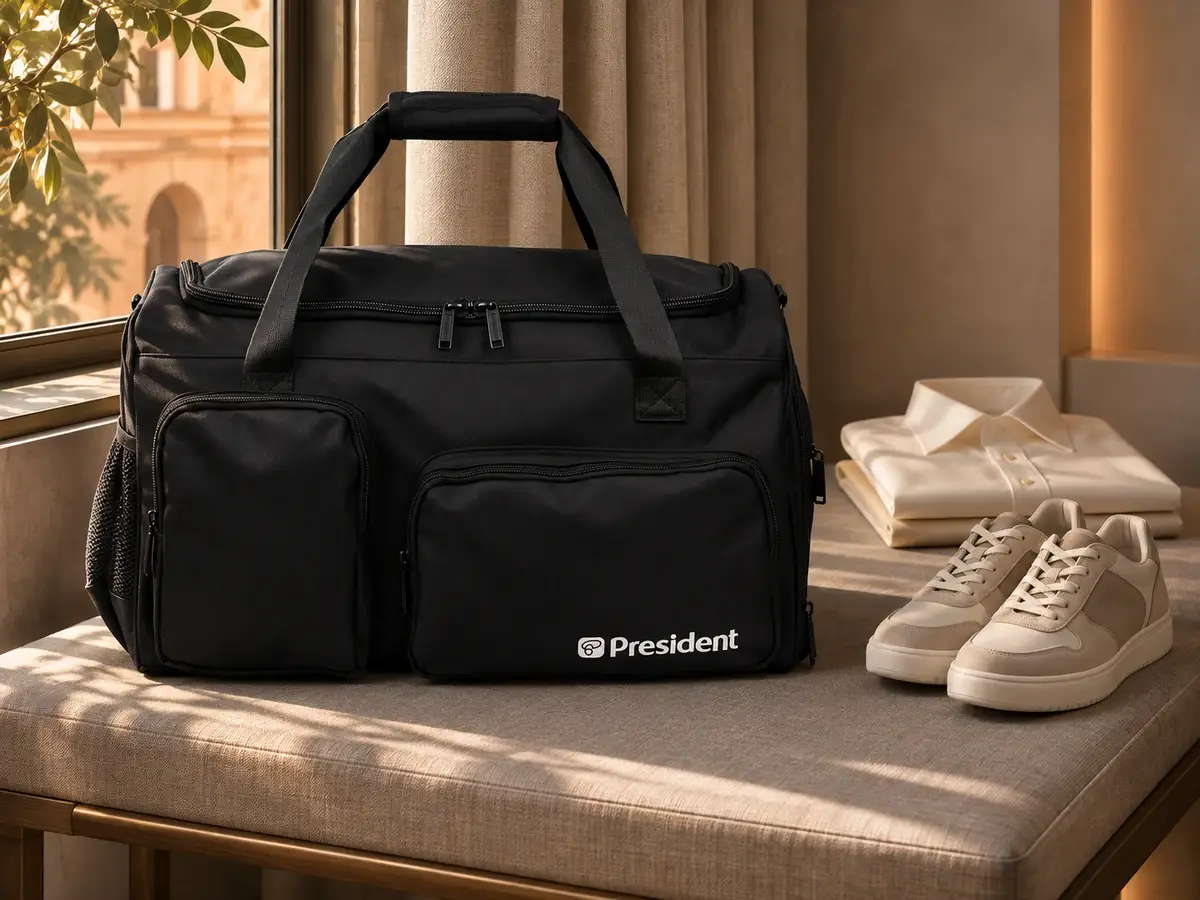
Lifestyle images are illustrative; check the linked product pages for exact designs and colours.
Duffel Bag vs Cabin Suitcase: Which Should You Try First?
Choose a starting point for your route, then check what could change your decision.
- Car boot already partly full.
Try first: A lightly packed duffel
What could change the choice: Stiff shoes can prevent the bag taking the shape of the gap. - Long terminal, smooth floor.
Try first: Rolling case
What could change the choice: If you’ll also have to lift it onto a train, try the packed weight with your other bag in hand. - Laptop bag already on one shoulder.
Try first: A roller for your clothes
What could change the choice: The ticket may not allow both pieces; solve that before choosing how to carry them. - Choosing a case for a drive to a hotel.
Try first: The 20-inch BELOTTI 88-2, a SHONATI luggage model, is worth trying for a level walk from the car park.
What could change the choice: If the boot opening is too narrow for the rigid case, try a soft duffel instead. - Small room with no luggage rack.
Try first: A duffel you can open from the top
What could change the choice: If it collapses when partly empty, you may have to take things out to find one item.
Check the ticket before comparing the bags
Airline rules in this guide were checked on 5 November 2026; confirm the allowance for your own booking before travelling. Look up the airline operating each leg, including the return. Check the number of pieces before checking size: the allowance for a main cabin bag is different from the allowance for a personal item under the seat. A laptop tote that sits neatly on a suitcase handle still counts as a separate bag when your airline counts pieces.
For example, Air Arabia’s cabin baggage rules specify a main bag up to 55 × 40 × 20 cm and 7 kg, and a smaller personal item up to 3 kg. The combined limit, including duty-free purchases, is 10 kg. You can’t put the entire 10 kg into the main bag. Check the limits on your own itinerary using our UAE cabin baggage guide.
For a concrete example, the American Tourister Aerojoy Spinner 55 is listed at approximately 55 × 40 × 20 cm. That matches all three Air Arabia maxima on paper, with no spare centimetres. It doesn’t guarantee acceptance. A case with the same height but a depth of 23 cm is a different proposition, even if the two stand side by side and look almost identical.
A closer look at the BELOTTI 88-2 for a two-night trip
Consider the individual 20-inch BELOTTI 88-2, available in a Sky Blue colour option. The same listing also sells larger cases and a three-piece set; choose the 20-inch option if you want to compare the case described below.
The 88-2 has a polycarbonate shell, tie-downs and interior pockets. Lay a folded shirt across the clothes, secure the stack and give small accessories a pocket of their own. That organisation is useful if you want to take out one outfit at the hotel without unpacking the rest.
On a smooth terminal floor, four sets of Hinomoto double wheels let you roll the case beside you. At the station stairs, the calculation changes: you have to lift the case as well as everything you packed. The 88-2 collection specifications list the small case at 2.5 kg empty. With a 7 kg allowance for that bag, that leaves approximately 4.5 kg for its contents and any attached accessories.
Then check the shape. The published measurements are 55 cm high, 40 cm wide and 23 cm deep. Measure the case at its furthest points before your flight, including the wheels and handles. If the width on your ticket is 38 cm, the listed case is already 2 cm wider; leaving a shirt at home won’t change that.
Nor should you count on expanding this model for the return journey: expansion is not a confirmed feature. Pick the 88-2 when the measurements suit your ticket and you’ll use the wheels. For a light load, several flights of stairs and a tight car boot, try the duffel first.
For the 88-2, distinguish the number on the drop-down from the dimensions on the product sheet. “20-inch” identifies which version to select; it doesn’t tell you how deep the shell is.
The same 88-2 can lead to a different decision on a different ticket. Lufthansa lists an 8 kg cabin bag up to 55 × 40 × 23 cm for long-haul Economy. The 88-2’s published figures match that allowance exactly. With about 5.5 kg left for contents and any attached accessories, a traveller might reasonably shortlist this case, then check it with a tape and scales. Don’t carry that conclusion over to a Lufthansa short-haul Economy Basic booking that includes only a personal item as standard.
On the Air Arabia example above, the 88-2 is already 3 cm too deep by its published figures. Its wheels may be ideal for your walk through the terminal, but they don’t solve that mismatch. For that flight, look for a shallower bag or check what your booking allows in the hold. For the drive to a hotel, you can set the airline comparison aside entirely.
When a second pair of shoes makes the duffel worth trying
Picture a two-night trip: you plan to swim on Friday and have dinner out on Saturday. You want trainers for the journey, another pair of shoes for dinner and somewhere to put damp swimwear on the way home. The black PRESIDENT 66011-18 gym duffel has a shoe compartment and a separate wet pocket. Those features give each item a place; they do not give you extra packing capacity.
Put your own shoes in first, then see how much room is left for the clothes you actually want to take. Keep electronics away from damp items; the product information does not establish that the wet pocket is leakproof.
For a car trip, try lifting the loaded bag by its handles and sliding it into the gap that will be left in the boot. For a flight, there is an extra step. The label says 18 inches, but SHONATI does not confirm all three external measurements. Zip the loaded bag, measure its longest, widest and deepest points, and weigh it. Repeat if a purchase changes its shape on the way home.
If most of your journey is a long walk across smooth terminal floors, a place for your shoes may matter less than being able to roll the load. Try the duffel on your shoulder with those same shoes inside before deciding.
Follow the bag from the car boot to the bedroom
Driving to a hotel: With the BELOTTI 88-2, measure the boot opening as well as the space beyond it. A rigid case needs room to pass through the opening without bending. If it fits and the route from parking to reception is level, its wheels spare you a carry after the drive. If the only space left is an irregular gap between other bags, try the duffel with the shoes already packed.
Taking the metro with work equipment: If the laptop is in your backpack, the BELOTTI can roll beside you instead of adding a second shoulder strap. Try the least convenient part of the trip as well: hold the loaded case off the ground while wearing the backpack. If neither the packed 88-2 nor a shoulder duffel is manageable on the stairs, lighten the load or check for a step-free route to the hotel before choosing either. The 88-2’s shell and interior pockets are not a substitute for a properly fitted laptop sleeve.
Unpacking in a small room: Before choosing the BELOTTI for its interior organisation, decide where you’ll actually open it. At home or in the shop, try opening the case on a surface the size of the hotel rack, with enough room to open it and reach your belongings. If you’d have to put it on the bed each time you need a charger, a top-opening duffel may be easier to live with. If you unpack once and store the case, that advantage matters less.
Try the same two-night packing list in both bags
Lay out two changes of clothes, nightwear, toiletries, a charger and the shoes you’ll really take. For a work trip, add the laptop and its sleeve wherever you intend to carry them. Keep the list unchanged for each bag. Similar outside dimensions need not leave the same useful space inside: the shape of the opening, dividers and shoe compartment all affect where your clothes can go. This is a check you can do yourself, not a packing test already performed on these models.
- Close each bag normally. If you have to leave something out, note which item. A zip that closes only while someone presses on the lid isn’t much use on the return journey.
- Measure and weigh the closed bag. Include wheels, fixed handles and bulging pockets. Our cabin bag measuring guide explains which outside points matter.
- Retrieve the same item. Try to reach the charger without taking everything out. Notice what has to move and how much floor space the open bag occupies.
- Repeat with a return purchase. Add the item you actually expect to buy, close the bag and check again. A soft side may bulge past the depth limit; a case that keeps its shape can still exceed the weight limit.
Questions before you leave
Can a smaller duffel still be too big for the cabin? Yes. A bag can hold fewer litres than a suitcase and still be too deep with your shoes inside. Compare the widest parts of the packed bag with each limit on your booking; a litre rating measures something different.
Would a wheeled duffel solve both problems? Sometimes. If you prefer a duffel opening but spend most of the journey rolling, try one. The base and wheels won’t compress like the fabric sides. Check its empty weight and try lifting it rather than assuming it behaves like an ordinary shoulder duffel.
Should I pack a folding duffel for the return? It can be useful for clothing if your return fare includes a checked bag or you’re willing to add one. You can also use it as your main cabin bag if it meets the limits. Carry it as an extra piece only if your return booking allows the additional bag and its packed size and weight.
For a short trip, start with the bag that works on the hardest part of your route. Then try it with the things you want to take back as well as the ones you’re taking out. For an in-person comparison, use the SHONATI store and contact details to confirm availability of the exact model and colour before visiting.