
How to Clean and Store a Handbag Without Damaging It

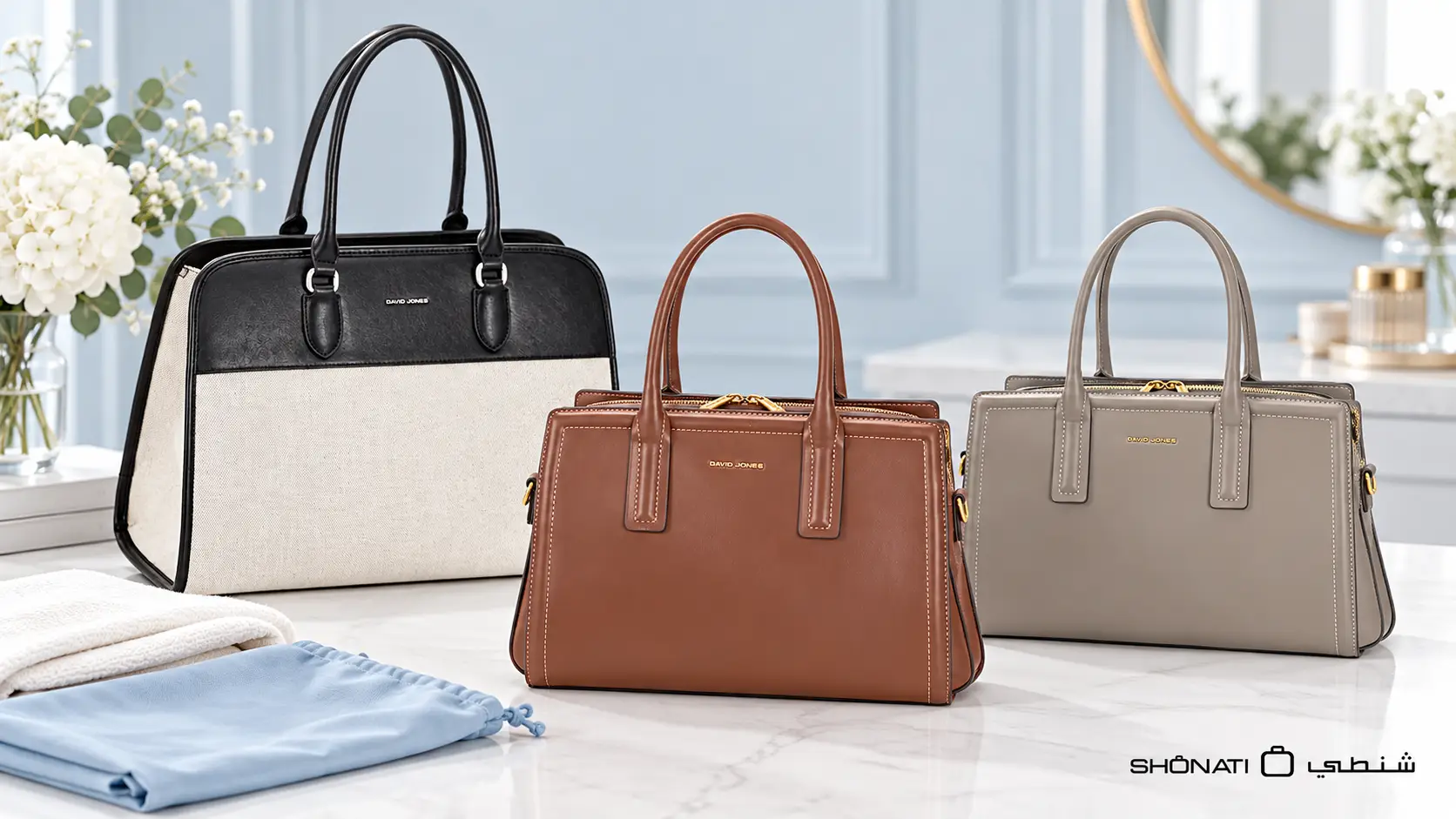
Here is how to clean a handbag without damaging it: identify its material and finish first, empty it, remove loose dust gently, and use only a cleaning method suitable for that model. Let it dry fully before storing it with appropriate support and protection.
Leather, PU faux leather, suede-effect surfaces and fabric panels can require different care—even when they look similar.
This guide helps you choose a sensible next step for everyday dirt, lining care and storage. The product examples use published SHONATI descriptions; they are not results from cleaning or durability tests.
Start here: what does your handbag need?
| What you notice | Your next step |
|---|---|
| Loose dust or crumbs | Empty the bag and gently remove loose debris without pulling the lining or forcing the structure. |
| A light surface mark | Check the care instructions for that material and finish before applying moisture or a cleaning product. |
| A stained lining | Check whether the lining can be treated separately. A fabric lining does not automatically make the bag washable. |
| Ink, transferred colour or a persistent stain | Ask the manufacturer or an appropriate bag-care specialist before trying stronger products. |
| A sticky, cracking or peeling surface | Stop rubbing or adding cleaner. Surface deterioration needs assessment rather than more cleaning. |
| A bag going into storage | Empty it, let it dry fully and protect its shape without stretching or crushing it. |
Check the material and finish before cleaning
Start with the care label, supplied instructions or product information for the exact model. Check the body, surface finish, lining, handles and strap separately: they may use different materials.
A crocodile-effect pattern does not mean crocodile leather. A suede-like surface may be synthetic rather than genuine suede. If the description is unclear, send the retailer the model code and photographs of the label before applying water, conditioner or stain remover.
Our guide to PU leather in handbags explains the material terms and how PU differs from real leather.
| Material or finish | What to check |
|---|---|
| Smooth or embossed PU faux leather | Whether a slightly damp cloth is permitted. Do not assume a leather conditioner is suitable. |
| Real leather | The leather type and finish. A product recommended for one leather may be unsuitable for another. |
| Genuine suede or nubuck | The approved brush, product or specialist-care method. Do not borrow instructions from smooth leather. |
| Synthetic suede-effect material | Instructions for that specific surface. A suede appearance does not establish compatibility with suede-cleaning tools. |
| Canvas, nylon or other fabric | The complete construction, including coatings, trim and reinforcement. Fabric panels do not make the whole bag washable. |
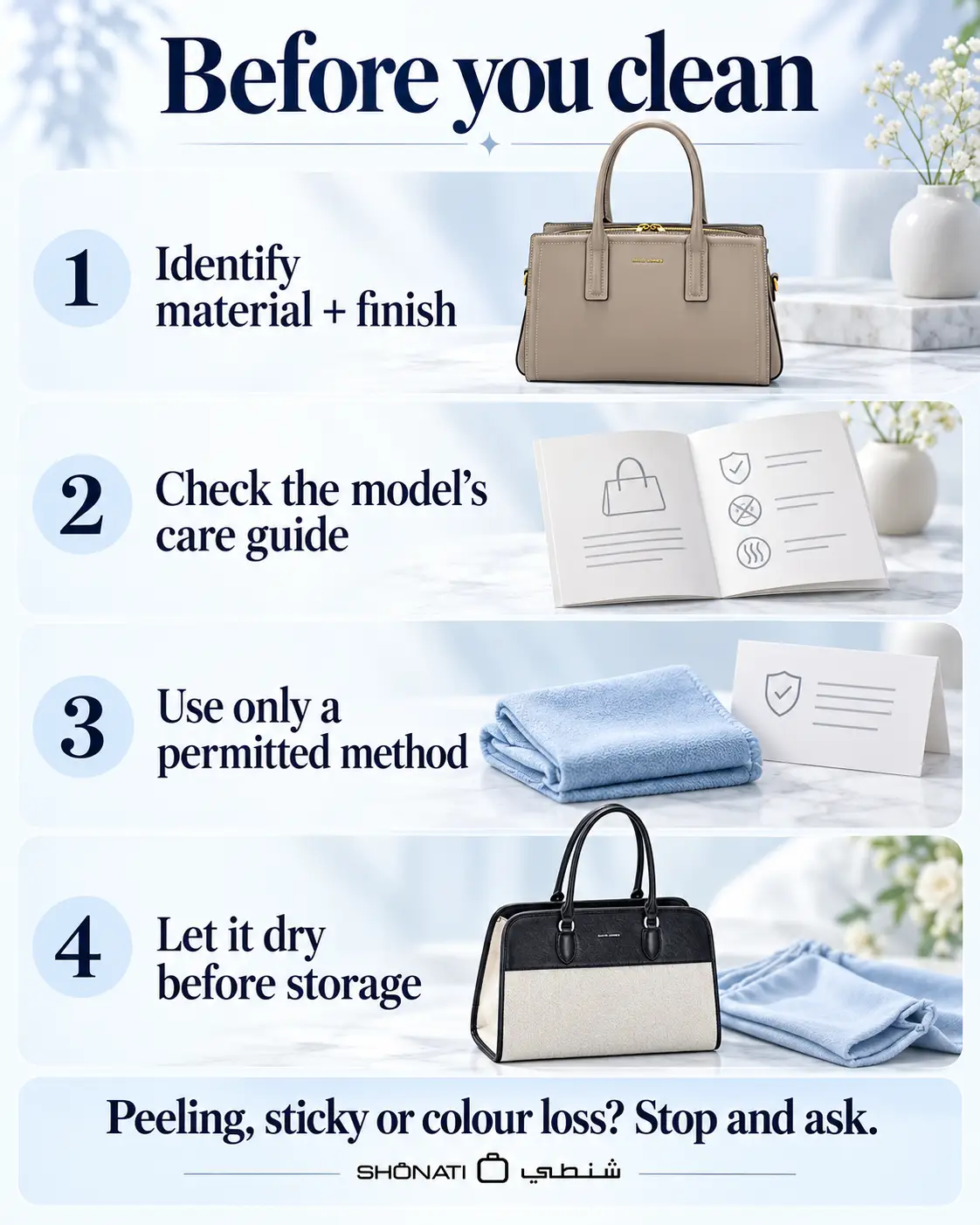
Images in this guide are AI-styled illustrations based on product photographs; they do not show cleaning tests.
How to Clean a Handbag: A Practical Routine
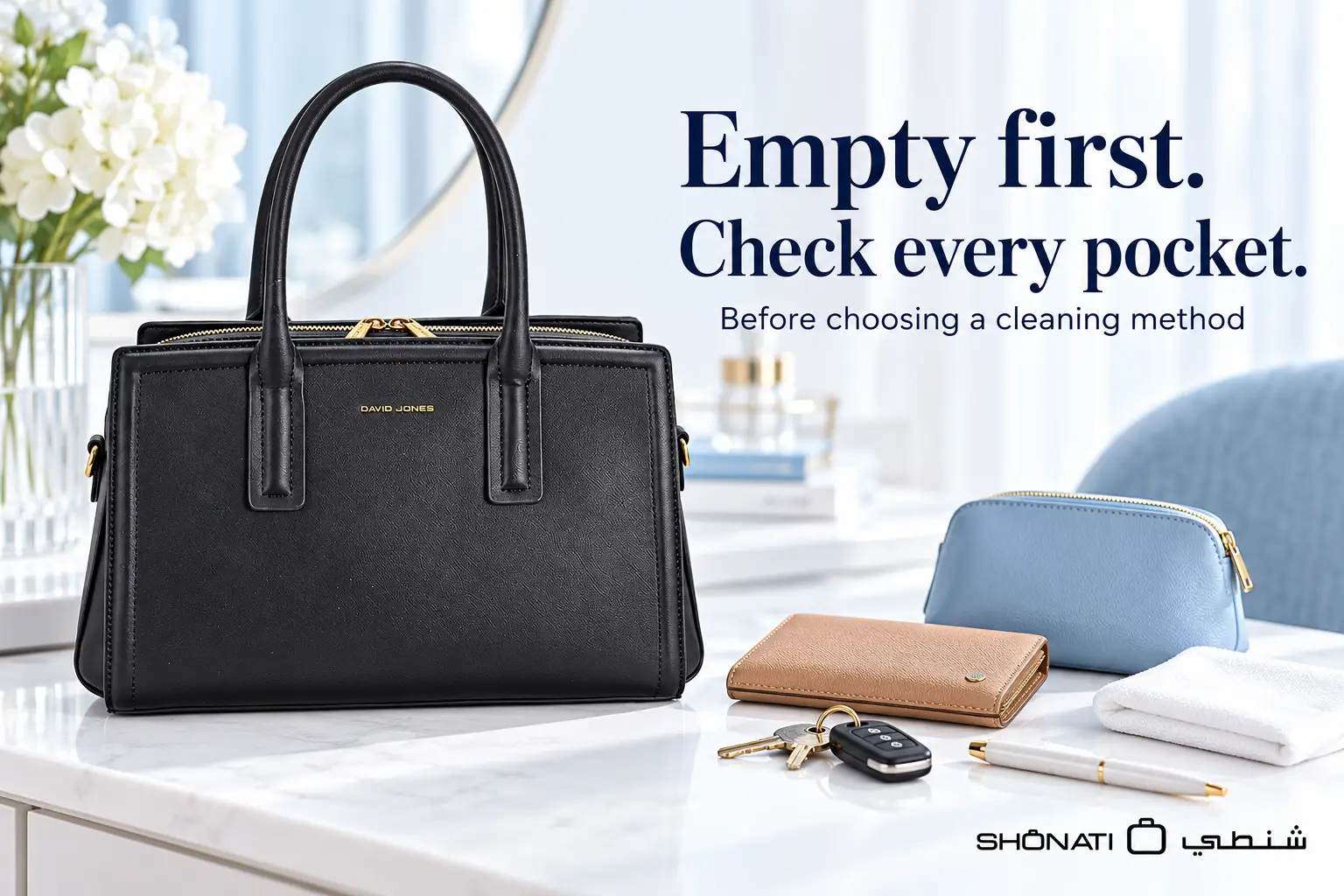
1. Empty every compartment
Remove belongings from the main compartment and pockets. Check for uncapped pens, makeup residue and leaking containers. Put small items aside so they do not get caught in seams or scratch the bag during cleaning.
2. Remove loose dirt gently
Use the dry-care method permitted for the surface, such as a clean, soft cloth where recommended. Remove loose debris from accessible areas without aggressive rubbing, tugging at the lining or forcing the bag inside out.
3. Treat light marks only with a suitable method
If the model permits a slightly damp cloth, use one that is barely damp rather than dripping. Where a cleaning product is approved, follow its directions and test on a concealed area first.
A patch test does not make an unsuitable product safe. Stop if you notice colour lifting, a change in texture, stickiness or an altered finish.
4. Let the bag dry before putting it away
Follow the model’s drying instructions and keep it away from direct heat. Do not use a hairdryer or place it in strong sunlight to speed things up. Check that the lining, seams and other areas touched by moisture are dry before closing the bag inside its storage cover.
How to care for the lining, handles and hardware
How to clean a handbag lining
Begin by removing loose debris. Do not assume the lining can be pulled out, detached or washed just because it is made from polyester or another fabric.
Prada’s care guidance, for example, treats its lining as an integral part of the bag rather than something to maintain separately. This illustrates why instructions for the complete bag matter.
- For loose particles: remove what you can reach gently without straining the lining.
- For wet cleaning: proceed only when the method is permitted for that model.
- For ink, oil or persistent staining: ask for suitable specialist advice before adding cleaner.
Prevention also helps: close makeup and liquid containers securely, and avoid carrying uncapped pens. Some dark linings can transfer colour to lighter belongings; Lulu Guinness highlights this possibility in its leather-bag guidance.
Handles, straps and metal details
Check these components separately. A woven detachable strap is not automatically machine washable, and a gold-tone fitting does not establish that metal polish is suitable. Avoid spreading cleaning products from one component onto a neighbouring material.
Two SHONATI examples: check the finish and the task
The following David Jones models show why a broad material label is only the starting point. The examples refer to published product guidance, not cleaning tests.
David Jones CM8455: canvas panels with contrasting trim
The David Jones CM8455 canvas handbag has a canvas textile body with contrasting leather-look trim and a polyester lining. The product guidance recommends gently removing loose dust with a soft, dry brush or cloth. For a small mark, it advises testing a slightly damp cloth on an inconspicuous area before spot cleaning.
Check the trim and lining separately, and ask for model-specific advice if you are unsure which method is suitable. Do not assume the whole bag can be washed because it has canvas panels.
David Jones CM8649: polyurethane synthetic leather
The David Jones CM8649 trapeze handbag is listed with a polyurethane synthetic-leather body and polyester lining. Its published care guidance recommends a soft, dry cloth for dust and, for light marks, a slightly damp cloth after testing on an inconspicuous area, followed by gentle drying.
These examples describe different constructions and cleaning tasks. A patch test does not make an unsuitable method safe, and the guidance for one model should not be applied automatically to another. Follow any instructions supplied with your own bag.
How to clean a white handbag and handle colour transfer
White or cream is a colour, not a material. A pale canvas bag, coated PU bag and leather bag can require different care. Identify the surface before deciding how to treat a mark.
Take care with prolonged contact between pale bags and dark clothing or other coloured surfaces. CHANEL’s care instructions specifically address this colour-transfer risk.
Transferred dye is different from loose dirt. If the approved routine does not remove a mark, do not keep scrubbing or escalate to bleach, alcohol, vinegar or an improvised household mixture. Ask which treatment is appropriate for the exact finish.
The same caution applies to ink, grease and suspected mould. Cleaning also cannot be assumed to restore a peeling coating or missing colour. For a deteriorating PU surface, see the explanation in our PU leather guide.
How to store handbags when they are not in use
- Empty and dry the bag. Remove belongings and loose debris, and check for moisture before storage.
- Support its shape where appropriate. Use light, suitable stuffing without stretching the body or forcing closures.
- Protect the surface. Use the supplied cover or the covering recommended for the model.
- Prevent pressure and marks. Avoid piling other bags on top or pressing chains, buckles and straps against delicate surfaces.
- Choose a suitable location. Keep the bag away from direct heat, prolonged sunlight and excessive moisture.
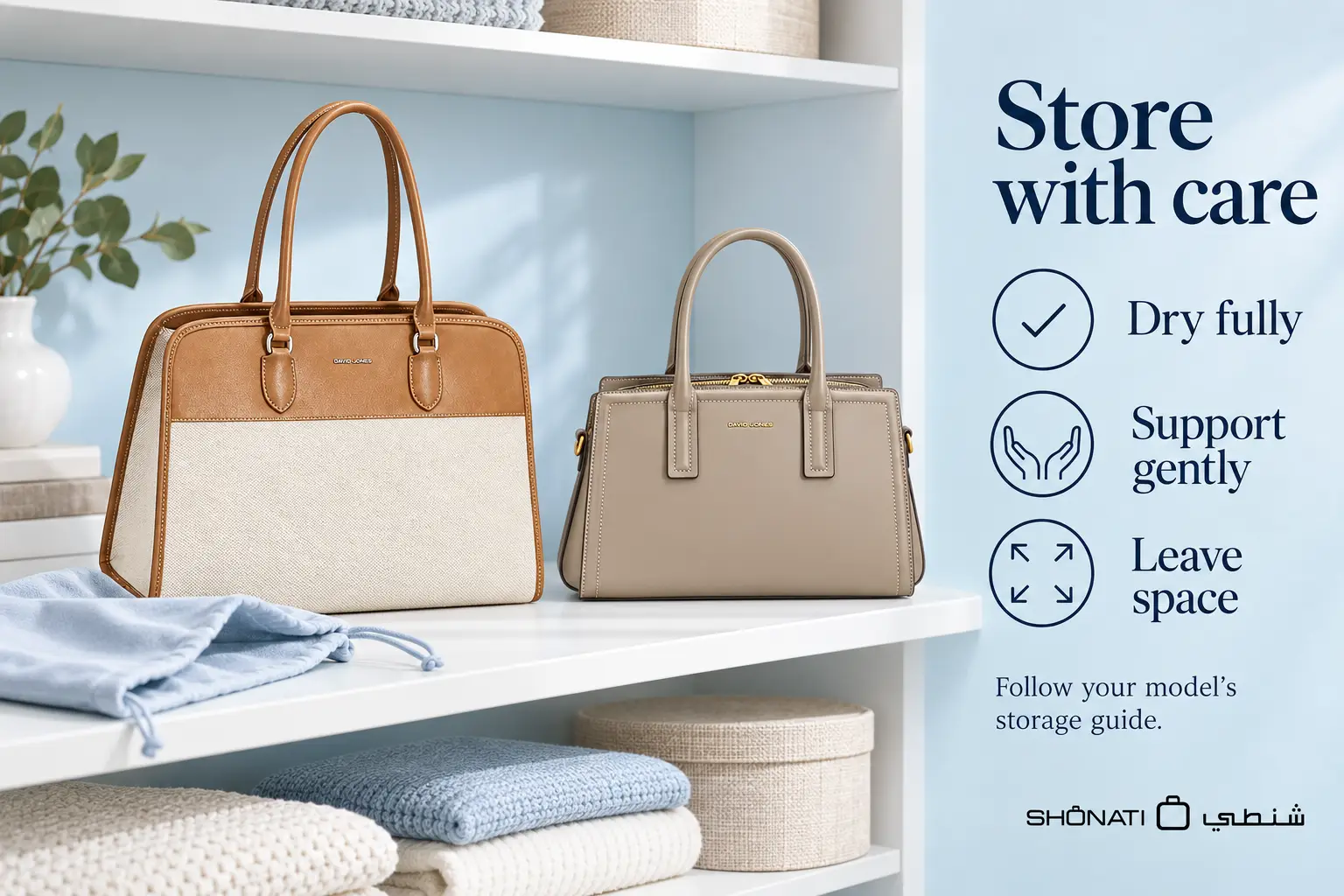
Storage position is not universal. For example, Longchamp recommends storing its canvas-and-leather Le Pliage bags flat and unfolded for longer periods. Do not force every bag into an upright position.
Can you store handbags in plastic bags or boxes?
A sealed plastic bag is not a good default choice. Coach recommends breathable cloth storage for its bags and warns that plastic can trap moisture and restrict air circulation.
For your own bag, follow the recommended cover and storage conditions. Do not put a damp bag into a closed container. The material of a box alone does not establish whether the complete storage arrangement is appropriate.
How to store handbags in a small wardrobe
Give each bag enough space to avoid compressing its body or bending its handles sharply. Arrange bags by their shape and available shelf height rather than squeezing them into identical spaces. Keep hardware from pressing against neighbouring bags, and avoid long-term hanging by the straps where this could stretch them.
If space is tight, reduce the number of bags on a shelf before adding more stuffing or tighter containers. Preserving the bag’s shape matters more than fitting every bag into one row.
Frequently asked questions
Can you dry clean a handbag?
Do not assume a handbag is suitable for dry cleaning. CHARLES & KEITH explicitly advises against it for its faux-leather products. If routine care is insufficient, ask the manufacturer which specialist treatment suits your model. A professional service is not automatic permission to use a standard dry-cleaning process.
Can you clean a handbag with baby wipes?
Do not use baby wipes as a default handbag cleaner. Their suitability depends on the ingredients and the bag’s finish. Use the method specified for your model rather than assuming that a wipe suitable for skin is suitable for a handbag.
Can you put a handbag in the washing machine?
Only if the manufacturer explicitly permits machine washing for the complete bag. A fabric exterior or lining alone is not enough: trim, closures, coatings and internal structure also matter.
Does every leather handbag need conditioner?
No single conditioner or schedule suits every leather finish. Use conditioner only when recommended for the particular material and model. Do not transfer a leather-care routine to PU faux leather.
How often should you clean your handbag?
Check it regularly and respond to loose dirt or spills using the permitted care method. How much care it needs depends on use, material and condition; repeated deep cleaning is not automatically beneficial.
Unsure about the material of a SHONATI handbag?
Start with its product page and any instructions supplied with it. If something is unclear, contact SHONATI with the full model code and clear photographs of the bag and care label. Ask for clarification before choosing a cleaner or treating an unfamiliar surface.