
What Size Suitcase Do You Need for 3, 7, 10 or 14 Days?

For a 3-day trip, start with a cabin-size suitcase. For 7 days, compare cabin and medium cases; for 10 days, start with medium. For 14 days, compare medium and large. These are starting points for one adult: laundry, bulky clothing, extra shoes and shopping can change the choice. Your packed bag must also meet your booking’s baggage rules.
Choosing suitcase size by trip length works best when you count what you will carry, not just the nights away. A two-week stay with a washing machine can need less luggage than a seven-day trip with formal outfits, boots and no laundry.
Use the guide below to narrow your options, then check your actual packing list before buying. If you first need the difference between cabin, medium and large categories, our complete luggage size guide explains those labels.
Suitcase size by trip length: 3, 7, 10 and 14 days
| Trip length | Start by comparing | When the smaller option may work | What could require more space |
|---|---|---|---|
| 3 days | Cabin-size luggage | A compact casual wardrobe, limited footwear and small toiletries | Formalwear, bulky equipment, gifts or packing for another person |
| 7 days | Cabin versus medium | Light clothing, outfit reuse and laundry where needed | No laundry, several changes per day, extra shoes or winter layers |
| 10 days | Medium; assess cabin if packing light | A planned laundry stop and a repeatable wardrobe | Several climates, bulky outfits, work equipment or return shopping |
| 14 days | Medium versus large | Reliable laundry and clothing suitable for repeated use | Two weeks without washing, special-event outfits or shared packing |
Apply the airline check to every row. A suitcase sold as cabin size is not automatically permitted on your flight. Likewise, a large case may offer more space than you can use within your checked-baggage weight allowance. Choose the smallest option that comfortably fits your necessary items and remains practical to move.
What size suitcase do you need for a 3-day trip?
A cabin-size case is a sensible first option for a short city break, weekend visit or simple work trip. Begin with what you will wear on the journey, then add the clothing changes, toiletries and equipment needed during the stay.
For a casual three-day break, build outfits around one main pair of shoes and compatible clothing. Add another pair only if the itinerary needs it. A laptop, camera or formal shoes can make a bigger difference to the remaining space and weight than one extra T-shirt.
Consider medium luggage when the itinerary justifies it: a wedding, several business outfits or gifts for relatives can turn a short trip into a substantial packing load. Check whether checked baggage is included before making that decision. A short stay does not make an oversized or overweight bag acceptable in the cabin.
What size suitcase do you need for a 7-day trip?
For one week, compare a carefully packed cabin case with a medium checked case. Cabin luggage becomes more realistic when your clothing is compact, several pieces work together and you can wash anything that needs refreshing. Medium luggage is worth comparing if you want more outfit choice or will not do laundry.
Make a list around your actual activities. Seven days at one warm-weather destination is a different task from seven days split between meetings, dinners and outdoor excursions. Count required changes rather than assuming one outfit serves every activity.
Hot weather can reduce the bulk of individual garments while increasing how often you change them. Cooler destinations may require fewer changes but larger layers. Neither climate automatically means a particular suitcase size.
Two seven-day plans can lead to different choices. A casual traveller who can wash clothes might compare a compact list of four packed tops, two packed bottoms, sleepwear, one light layer and one spare pair of shoes, with underwear and socks planned through the laundry turnaround. Another traveller attending daily meetings and an event may need several separate outfits and formal shoes. These are illustrative lists to adapt, not promises that a particular case will hold them.
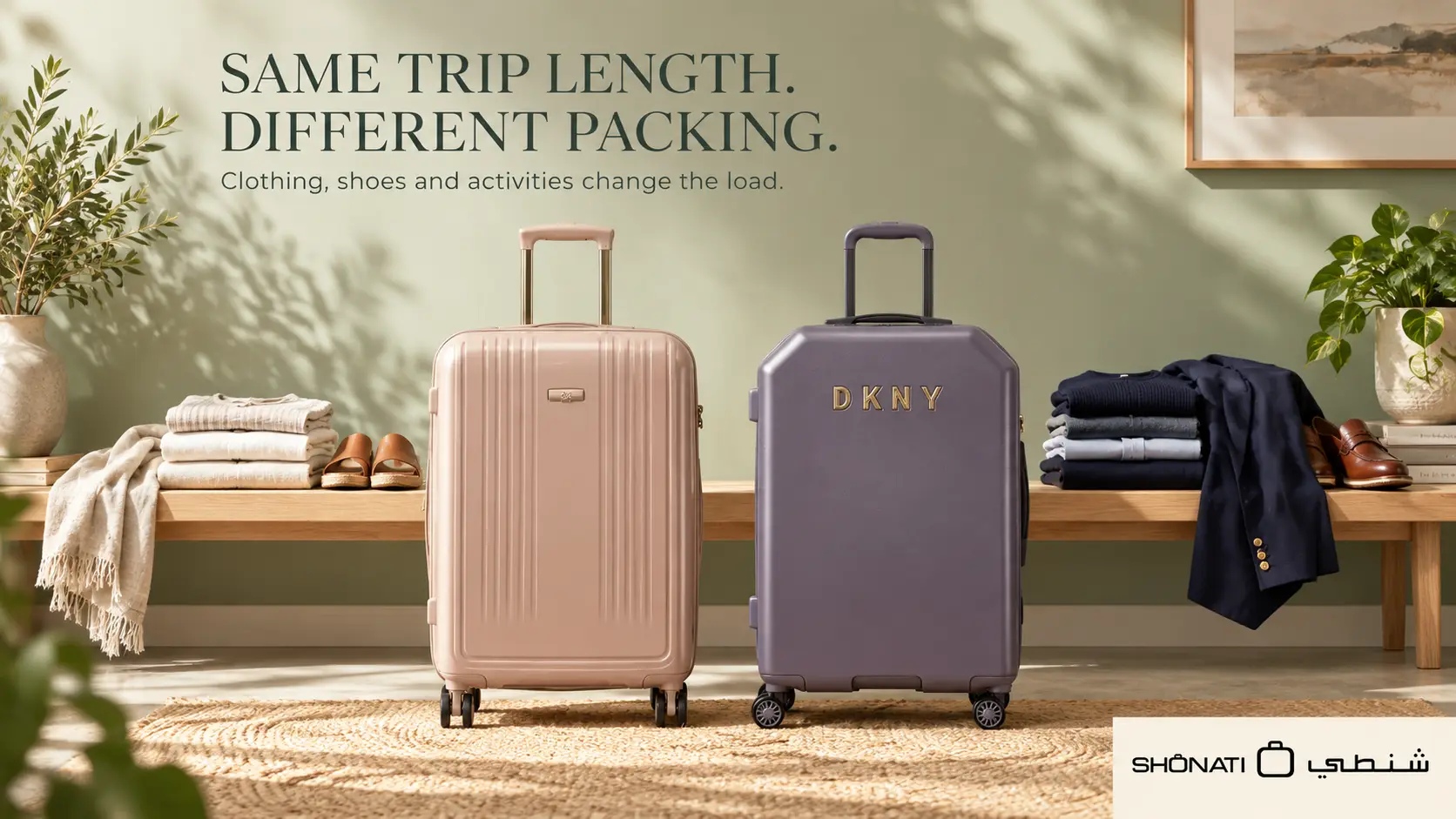
Two trips of the same length can need different packing space, depending on clothing, footwear and activities.
Try this decision: if your week’s essentials fit a cabin case, weigh the complete load before celebrating the space saved. If it fails the permitted weight, remove nonessential items or compare an appropriate checked option. Moving the same contents into a larger case only addresses space; it does not reduce their weight.
What size suitcase do you need for a 10-day trip?
A medium suitcase is a useful starting point for ten days. Before moving up to large, decide whether you need ten days of separate clothing or a smaller wardrobe that you will wash and reuse.
For example, a ten-day visit staying with family may include access to a washing machine. A ten-day tour changing hotels every night may offer much less convenient laundry, even if a service technically exists. Plan around when clean clothes will be back in your hands.
One scheduled wash can reduce the number of everyday garments needed, but it does not remove fixed items such as shoes, chargers, a laptop or an event outfit. Add those first when deciding whether a compact plan is realistic.
Cabin-only travel may still suit a light packer with suitable laundry arrangements and a compliant load. A large case may be reasonable for bulky clothing or equipment. Neither choice follows automatically from the number ten.
What size suitcase do you need for a 14-day trip?
For two weeks, compare medium and large luggage against your laundry plan. A repeatable wardrobe can keep a medium case useful for a longer stay. If washing is unavailable and you need many clothing changes, start by assessing a large checked case.
A fourteen-day trip does not necessarily require twice the luggage of a seven-day trip. Shoes, outer layers and many accessories may serve both. The items that need replacing with clean ones determine how much your clothing load grows.
For a multi-stop itinerary, include the effort of moving the packed case between trains, taxis and accommodation. For a stay at one location, that handling trade-off may matter less. Compare what you can comfortably manage, including any other bags you will carry.
If you expect to bring purchases home, plan the return load before departure. Leave usable room and weight headroom, or check the cost and conditions of an additional permitted bag. An expanded case or spare shopping bag still needs to satisfy the applicable allowance.
Pack until the next reliable laundry day
Instead of multiplying every item by the trip’s total length, identify the longest stretch before washed clothes will be ready to wear again. Include the day you hand them over and any drying or collection time. This makes laundry a usable plan rather than a vague promise to pack less.
REI’s packing-light advice also recommends planning laundry and checking drying time. Build in enough clean clothing for your own needs if the service is delayed; do not rely on garments drying overnight unless that is realistic.
| Laundry arrangement | Plan your clothing around | Effect on the suitcase choice |
|---|---|---|
| No washing during the stay | All required clean changes for the full trip, allowing sensible reuse where appropriate | A larger packing space may be useful; confirm the actual load and weight. |
| Wash after day 7; clothes ready before day 9 | Clothing for days 1–8, including what you wear on departure. Keep day 8’s change while earlier items are washed, then reuse washed items for days 9–14. Add a delay buffer. | Medium or even a compact setup becomes worth checking; shoes and other fixed items still take space. |
Adjust the example for your itinerary and personal preferences. A gym session, a formal evening or children’s clothing changes may require a different schedule. If you would rather avoid laundry on holiday, include that preference honestly in the size decision.
Also distinguish outfit combinations from clean clothing: several tops and bottoms can create many combinations, but that does not mean every garment stays ready to wear throughout the trip. Plan washing and changes around your activities and comfort.
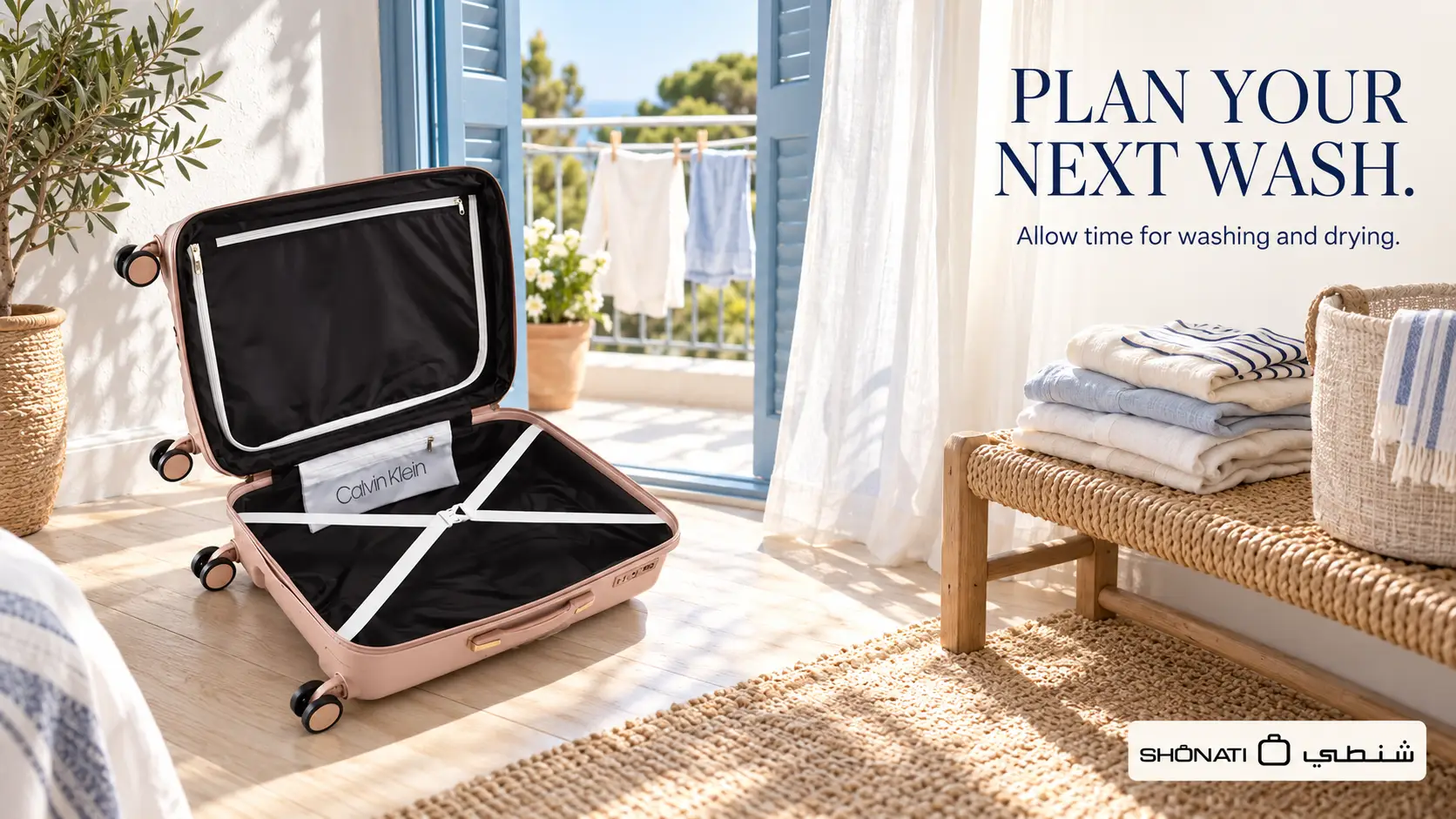
Plan enough clean clothing to last until your next wash is finished and everything is dry.
Five things that change how much space you need
- Destination clothing: lay out the required layers, rainwear or formalwear before comparing cases. Garment size and fabric thickness matter as well as quantity.
- Footwear: count the pairs you will pack separately from the pair you will wear. Boots and structured shoes need different space from sandals.
- Equipment: include work devices, chargers, sports items and essential accessories at the start, rather than adding them after the case is full.
- Shared packing: a guide for one adult cannot predict a family’s needs. Allocate space to each person and decide who will handle the bags.
- Return purchases: estimate the gifts or shopping you expect to bring back. Avoid choosing a case that only works for the outbound journey.
For a UAE departure, use the destination’s conditions and activities to build your list. For a visit to Dubai or Sharjah, consider your planned outings, indoor settings and purchases. Check the forecast near departure rather than relying on the climate at home.
When several people share luggage, decide the required combination before buying a bundle. Include each traveller’s belongings and permitted allowance, then check whether everyone can manage the bags during transfers.
Check the complete load before choosing a bigger suitcase
Use a case you already own for an initial packing rehearsal. If you are comparing new cases, use its known dimensions and how your load fits as a reference. Rick Steves’ packing guidance recommends laying everything out and practising with the loaded bag; the useful step is checking your own belongings.
- Lay out the whole load. Include toiletries, footwear and electronics, not just clothes. Separate what you will wear during travel.
- Pack in your normal way. Use the organisers you actually intend to take. Check whether the case closes normally without forcing the shell or zip.
- Check the external size. Measure the packed case, including wheels, handles and protruding pockets, in the configuration you will use.
- Weigh the complete bag. The empty suitcase, organisers and all contents contribute to the total. Compression can reduce clothing bulk; it does not remove the weight of those items.
- Check the return plan and handling. Account for expected purchases, then see whether you can comfortably move the luggage through your journey.
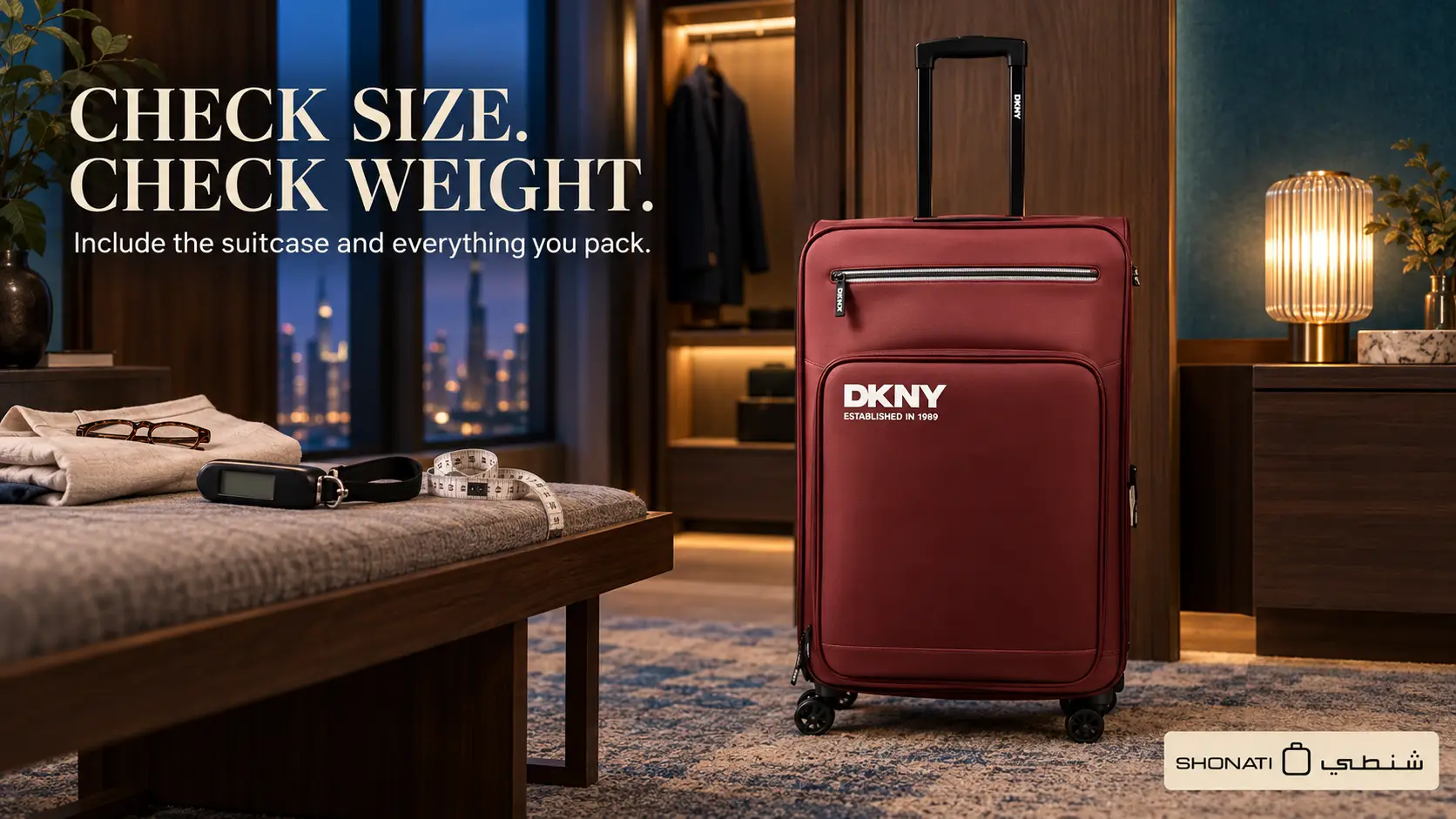
Measure the complete external size and weigh the suitcase with everything you intend to carry.
Space and weight are different constraints. If a bag has room left but is already at its weight limit, more capacity does not solve the problem. If the load is light but bulky, another size or shape may help, subject to the baggage allowance.
IATA confirms that baggage conditions are airline-specific. Check the permitted size, packed weight and number of bags for each relevant flight. For Emirates, the checked-baggage rules also distinguish between weight and piece allowances according to the journey. Litres describe capacity; kilograms describe mass. There is no fixed conversion between them for a packed suitcase.
Compare actual capacity: three Trento+ examples
Once your packing list is ready, compare specific models. These American Tourister Trento+ listings at SHONATI show how capacity and empty weight change across one collection. They are examples to assess against your load, not guaranteed matches to a number of travel days.
| Model | Listed dimensions | Base capacity | Empty weight |
|---|---|---|---|
| Trento+ 54cm | 54 × 37 × 24 cm | 34 L | 2.7 kg |
| Trento+ 68cm medium | 68 × 46 × 30 cm | 74 L | 3.75 kg |
| Trento+ 81cm extra large | 81 × 54 × 34 cm | 121 L | 5.1 kg |
The 81cm example is extra large; it is not the default recommendation for every two-week trip. Check whether you need that much space and whether its full dimensions and packed weight suit your journey. Confirm the expanded measurements separately if you intend to use expansion.
The 54cm example also shows why its cabin label needs checking: its listed depth is 24cm, while Emirates’ standard Economy cabin dimensions allow a depth of 22cm. It therefore exceeds that published depth limit. Check your specific flight’s rules before choosing it for cabin use; packing capacity and cabin eligibility are separate decisions.
Frequently asked questions
Is a 20-inch suitcase enough for a week?
It may be enough for a compact wardrobe with limited footwear and laundry where needed. Check the exact model’s packing space and your complete load. The label alone does not establish cabin eligibility; our 20 vs 24 vs 28 inch luggage comparison explains the differences between these common labels.
Is a 24-inch suitcase enough for 10 days?
A medium case is worth comparing for ten days, especially with a planned wash and reusable outfits. Bulky clothing, extra shoes or event wear may change the result. Check the particular case rather than treating every 24-inch model as the same capacity.
Do I need a 28-inch suitcase for two weeks?
Not necessarily. A medium case may work with reliable laundry and a compact packing list. A large case becomes more useful when you need extra clothing or bulky items, but it still has to meet your checked-baggage limits.
Can I travel for two weeks with cabin luggage only?
It can be practical if you can wash and reuse clothing, keep the load compact and meet all applicable cabin restrictions. Confirm the complete packed weight as well as size. A personal bag is only an additional option when your booking permits it.
What suitcase size do I need for a 23 kg allowance?
A 23 kg allowance is a weight limit, not a suitcase size. The right capacity depends on what you pack, while the airline may separately restrict dimensions and the number of pieces. Weigh your intended load before assuming a bigger case is needed.
Should I buy a bigger case just for souvenirs?
Compare the extra space needed with the packed weight you can still carry and the cost of any additional allowance. Leaving room in your existing case may be enough. Expansion or a second bag only helps if the resulting luggage is permitted and practical to handle.
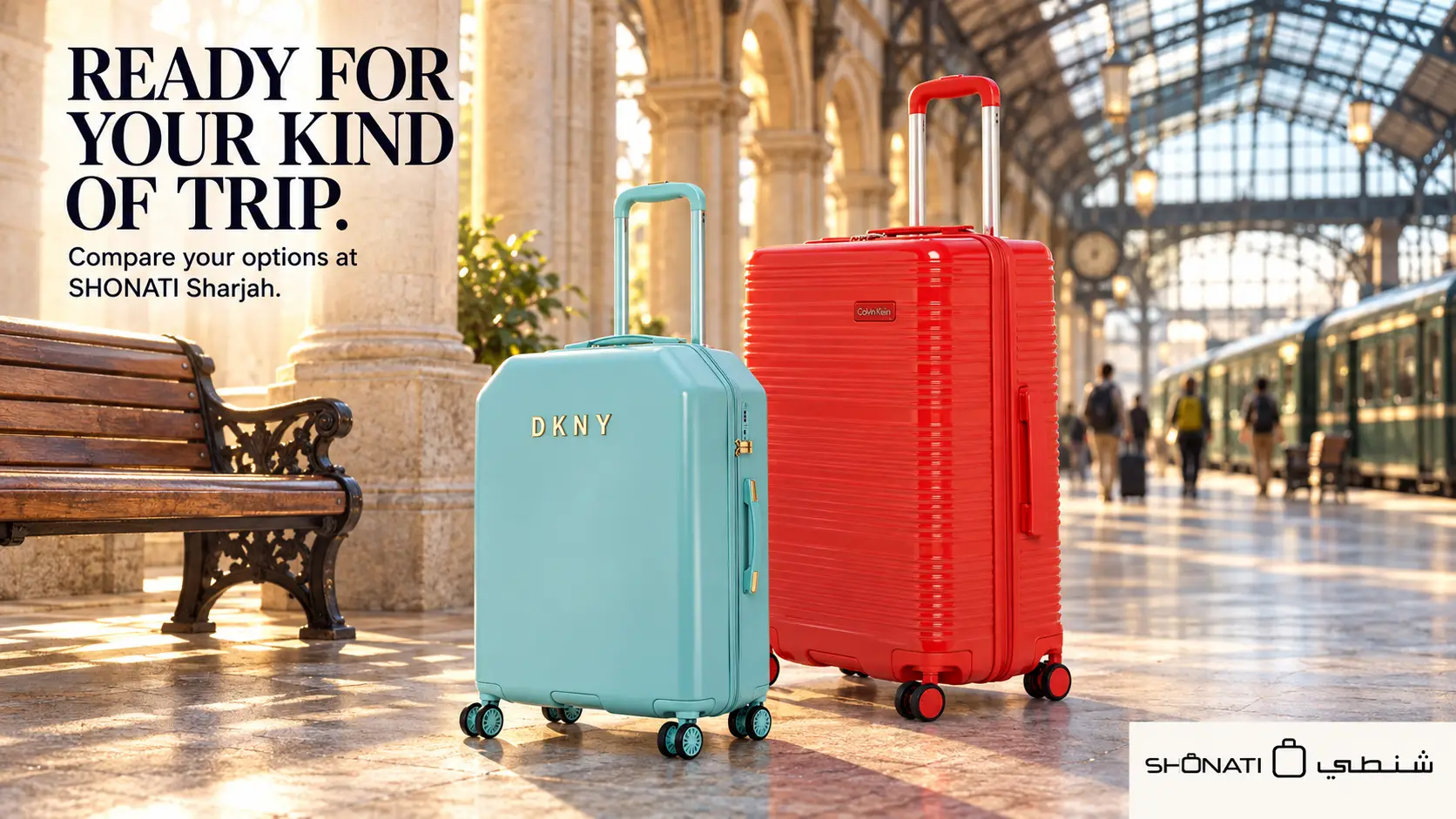
Choose around your itinerary, packing list and baggage allowance, then ask SHONATI Sharjah about available sizes and colours.
Choose luggage for your next trip at SHONATI Sharjah
Bring a short packing note when you compare luggage: trip length, destination, laundry arrangements, bulky items and your baggage allowance. It is easier to choose between two sizes when you know what needs to fit.
Ask SHONATI which sizes and colours are currently available before visiting. Compare the interior layout and complete dimensions, then choose a case around your actual travel needs.
Ask SHONATI about sizes and availability on WhatsApp or open the SHONATI Sharjah location in Google Maps.
Sources checked: 10 September 2026. Trip-length suggestions and packing scenarios are editorial planning guidance, not physical packing-test results. Confirm current product details and baggage rules before purchase and travel.