
How to Clean a Suitcase: Inside, Outside and Wheels

Before you start: check the material and care instructions
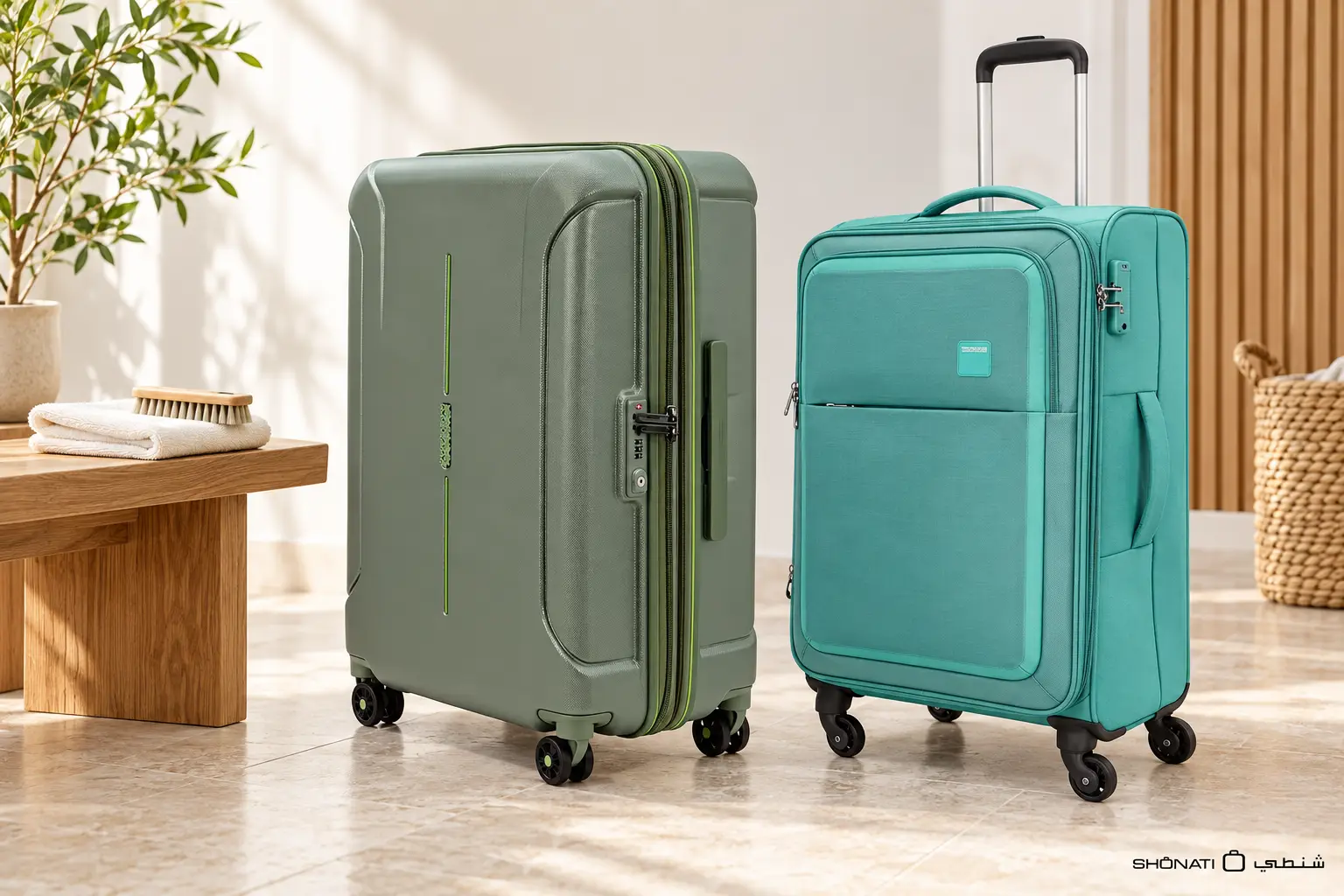
A suitcase contains several surfaces: the outer shell or fabric, the lining, trims, handles, wheels and fasteners. Instructions for cleaning the shell do not automatically apply to the inside.
Look for the model name and care label, then check the manufacturer’s guidance. If you are unsure whether your case is polycarbonate, polypropylene or another material, use its product specification rather than judging by appearance. Our guide to suitcase materials explains the differences.
- Empty all pockets and check for small valuables before vacuuming.
- Start with loose dirt; a case may not need a wet clean everywhere.
- Use separate clean cloths for the wheels, shell and interior.
- For a permitted cleaner, test an inconspicuous area first and check the result after it dries.
A successful spot test does not override a manufacturer’s restriction. Avoid trying several different products on the same stain when you do not know whether they are compatible.
Quick guide: choose the right cleaning route
| Part or problem | Where to start | What to check first |
|---|---|---|
| Loose dirt inside | Empty pockets and gently remove crumbs and dust. | Whether any removable parts have separate care instructions. |
| Fixed fabric lining | Use the manufacturer’s permitted spot-cleaning method. | Do not assume the lining can be soaked or detached. |
| Hard-shell exterior | Follow the shell-cleaning instructions using a clean, soft cloth. | Surface finish and cleaner compatibility. |
| Fabric exterior | Remove loose dust, then treat only what needs cleaning. | Care label, colour transfer and any coated trims. |
| Dirty wheels | Remove accessible debris and wipe as instructed. | Dragging, cracks or looseness that may need repair. |
| Persistent smell | Check contents, pockets and the storage conditions. | Whether the case has stayed damp or needs specialist assessment. |
How to clean the inside of a suitcase
Remove loose dirt before treating stains
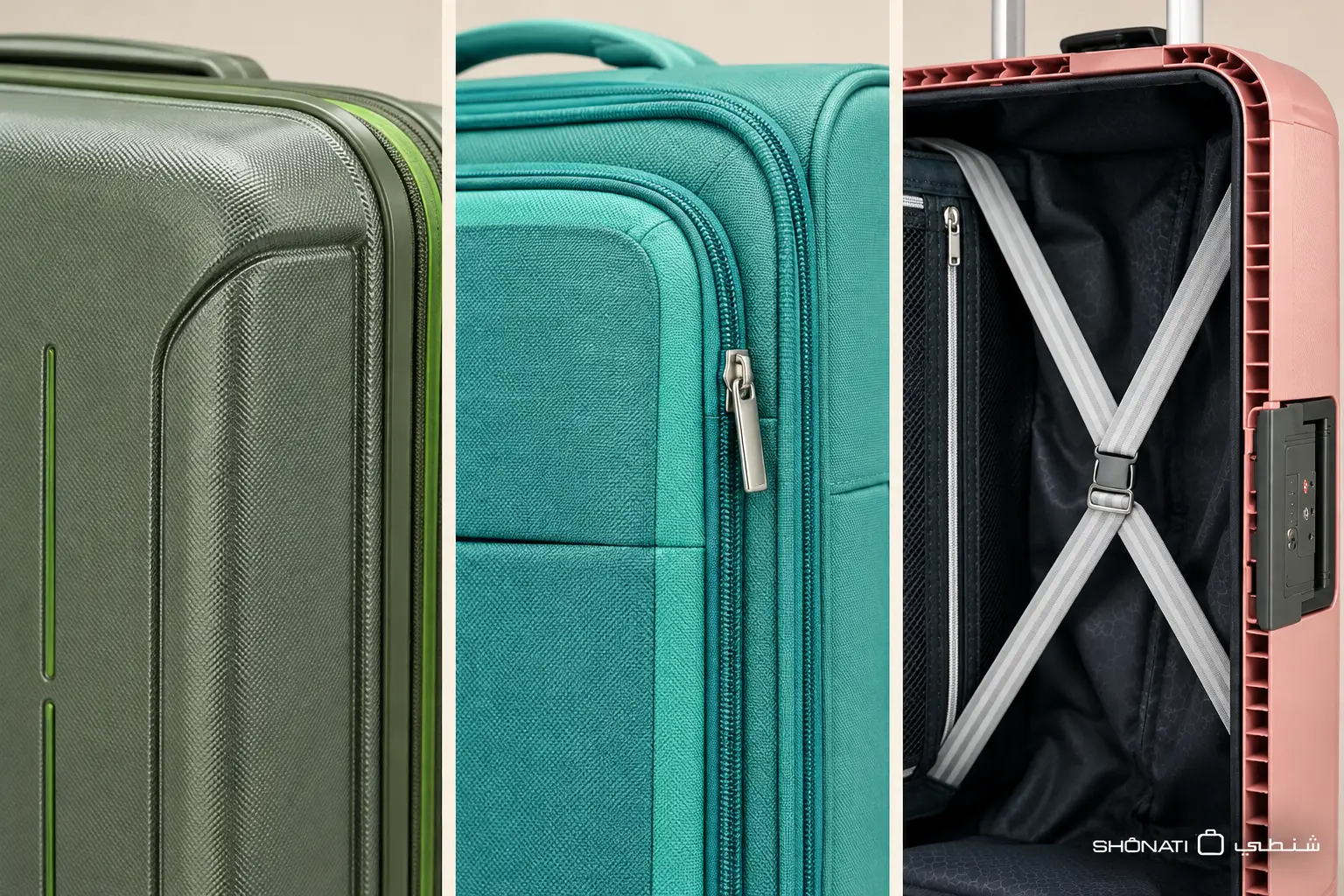
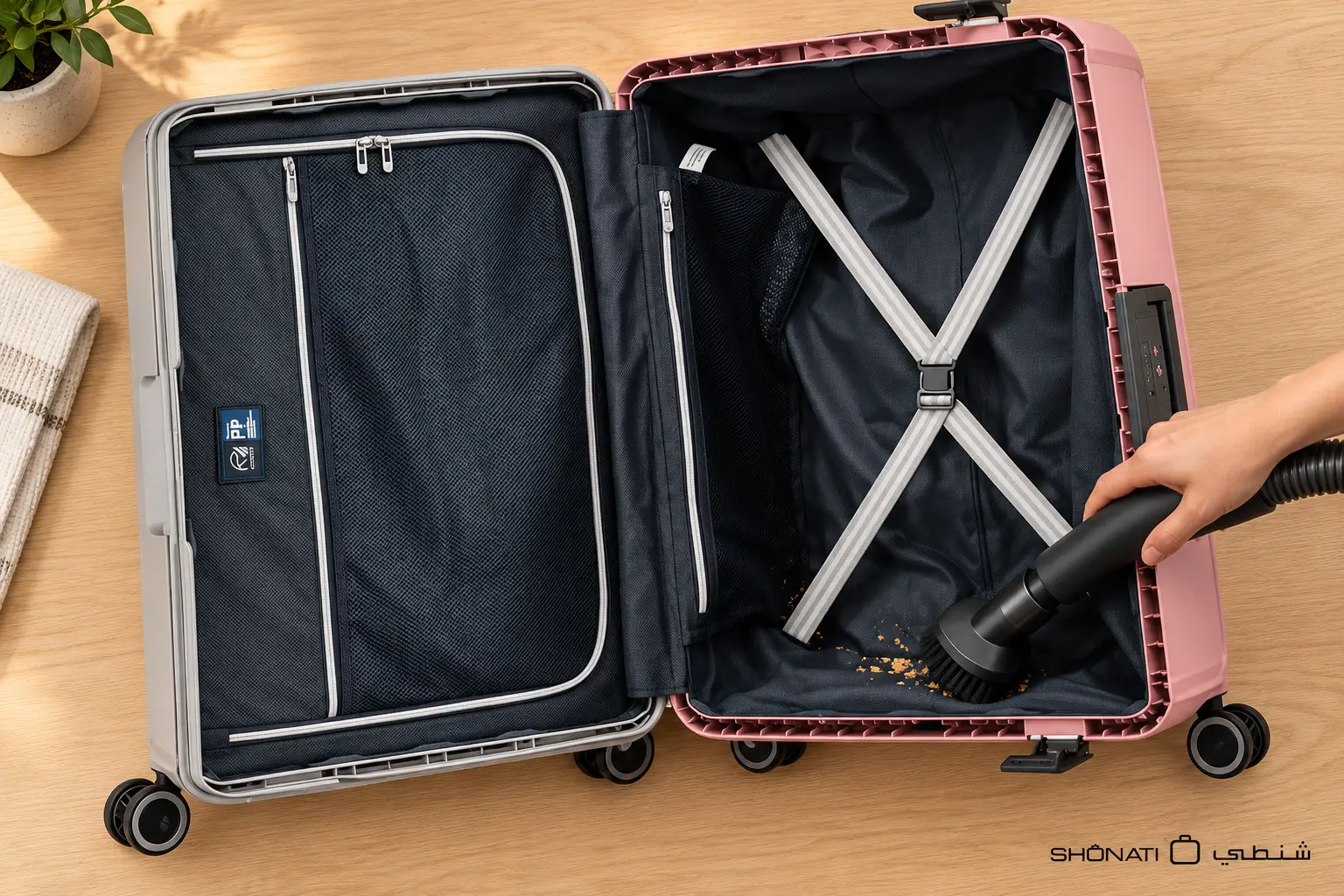
Open the normal packing compartments and pockets. Use a vacuum with a soft brush attachment gently around seams and corners, keeping it clear of loose fabric. RIMOWA includes careful vacuuming in its official interior-cleaning guidance.
Do not force open an internal access zip or pull the lining away from the shell. If you cannot tell whether a panel is intended to detach, check the instructions before removing it.
Spot-clean a fixed lining
For a fresh liquid spill, blot the affected area with a clean cloth. RIMOWA advises a soft cloth dampened with warm water for spills on its case lining. Other brands may specify a different method, so check before adding detergent or stain remover.
Work on the affected area rather than wetting the entire interior. For shampoo or another soapy spill, follow the permitted cleaning method and remove residue as directed. Check nearby pockets as well as the visible patch, then leave the compartments open to dry.
Wash a removable lining only when it is approved
Removable does not automatically mean machine-washable. Look for explicit washing instructions, including the temperature and drying method.
For example, DELSEY UAE specifies a detachable lining that can be machine-washed at 30°C for its SECURITIME ZIP 55 model. That permission applies to the lining described for that product, not to every DELSEY case or the whole suitcase.
How to clean the outside of a suitcase
Hard-shell luggage
For its polycarbonate luggage, American Tourister’s care guide describes a very mild solution of warm water and dishwashing soap, followed by a plain damp cloth to remove residue and a dry cloth to finish.
Check that this approach matches your own case. A glossy, textured or coated surface may have different requirements. Do not choose alcohol, a scouring pad, a polishing compound or an eraser sponge simply because another traveller used it successfully.
At SHONATI, the American Tourister Technum 68cm is listed as polycarbonate, while the Eminent Vertica 68cm Grey/Pink is polypropylene with a frame closure. These examples show why identifying the model is useful; their material labels alone do not establish which specialist cleaners are suitable.
Fabric and soft-shell luggage
Remove loose dust before tackling individual marks. Samsonite’s care guidance includes mild soap and water or appropriate spot-cleaning products for its softside luggage. Follow the instructions for your case and the cleaning product, including how to remove residue.
For a polyester example, SHONATI’s American Tourister Seville 69cm has a fabric exterior and front compartment. Remember to check the pocket lining and trims separately rather than treating the whole case as one washable piece.
If you are comparing constructions for a future purchase, our hard-shell versus soft-shell guide covers their practical differences.
How to clean suitcase wheels, handles and zips
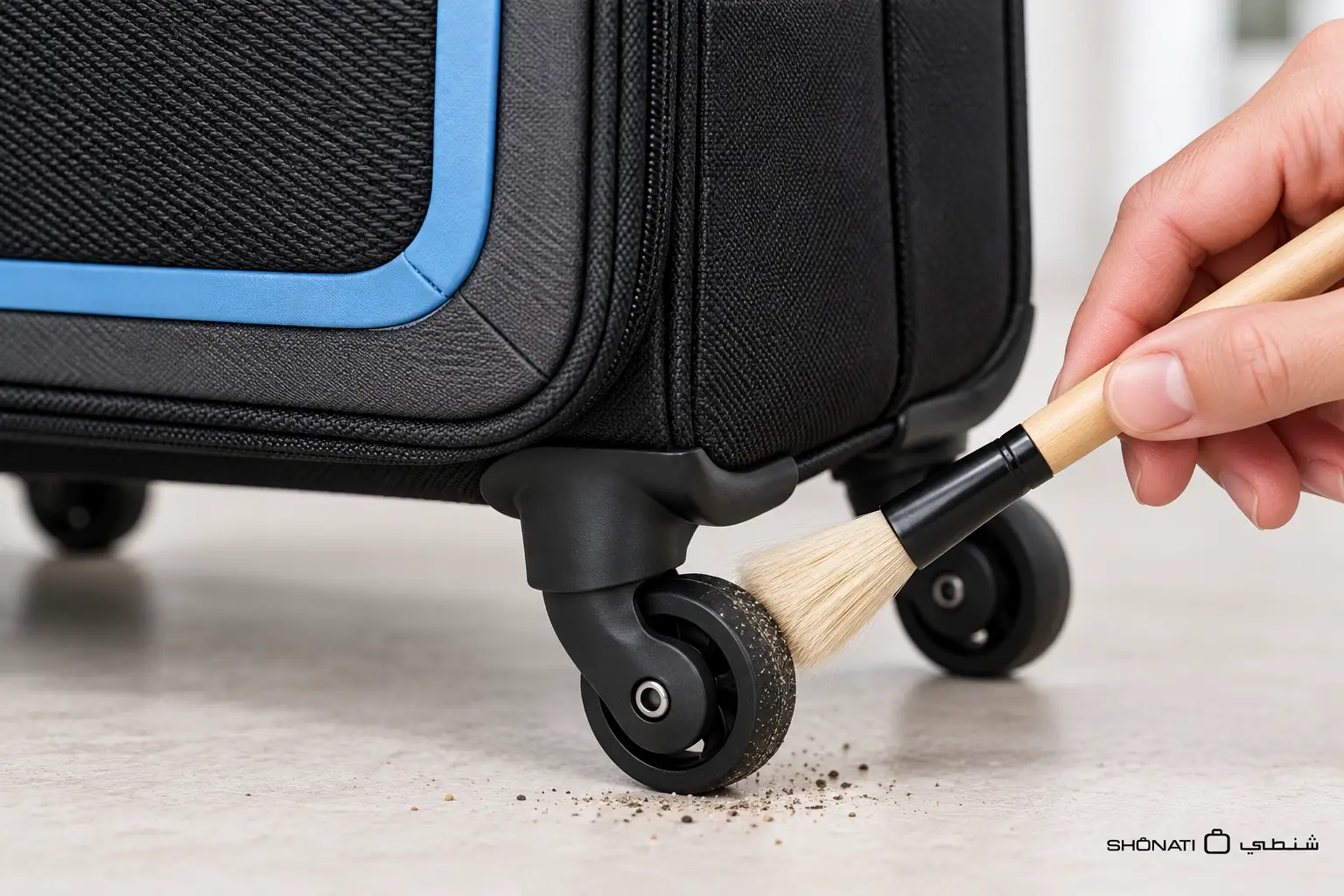
Inspect the wheel tread and the accessible space around the housing for dirt, hair and thread. Remove loose debris gently, then clean the exposed surfaces according to the brand’s instructions. Do not force tools into the mechanism or dismantle it without guidance.
American Tourister’s care page says regularly maintained wheels do not need routine lubrication. That is a useful reason to check before reaching for an oil or spray: lubrication is not a universal step for every suitcase.
Wipe handles and fasteners using the method approved for those components, then dry them. If a wheel still drags, a housing is cracked or a zip resists closing, further cleaning may not solve the problem. Seek model-specific advice rather than forcing the part. Our two-wheel versus four-wheel guide explains the different rolling arrangements.
What if the first clean does not work?
A mark remains on the shell
A remaining mark may be a stain, transferred material or an actual scratch. Repeating the same action with more pressure is not a reliable way to tell the difference. Check the maker’s guidance before moving to a stronger product, and stop if the surface changes colour or appearance.
Cleaning should not be presented as a guaranteed way to restore a damaged finish. A clear photograph, the model code and a record of products already applied will make it easier to obtain useful advice.
Makeup or glitter remains in the lining
Separate the problem into loose particles and the stain underneath. Remove what you can using the permitted dry debris-removal method, then check the lining instructions before treating the remaining mark. Makeup remover suitable for skin is not automatically suitable for a suitcase lining.
If you have already applied several products, record them before contacting the manufacturer or a specialist cleaner. Do not promise yourself a perfect result at the expense of the fabric.
The suitcase smells musty after storage
Empty it completely and check pockets, packing accessories and the place where it was stored. A fragrance can change how the case smells without resolving a damp lining or unsuitable storage conditions.
If the smell persists after appropriate cleaning and complete drying, or there is visible growth or a history of prolonged wet storage, ask for suitable specialist advice. This routine cleaning guide does not establish that a suitcase has been disinfected or cleared of mould.
Dry your suitcase completely, then store it
Leave the normal compartments open while the case dries in a suitable indoor location with airflow, following the maker’s instructions. Check pockets, seams and padded areas before closing it. Avoid setting a universal drying time: the amount of water used, construction and room conditions vary.
Samsonite warns that extremes of temperature and humidity can age luggage. For homes in the UAE, assess the actual storage location: a cupboard, garage or under-bed space is not suitable simply because the suitcase fits there.
- Keep it dry: do not put away damp luggage or leave damp items inside.
- Check the environment: follow the manufacturer’s guidance on heat, sunlight and ventilation.
- Protect the shape: avoid forcing the case into a tight space or placing heavy objects against it.
- Choose a suitable cover: follow brand guidance and only cover the case after it has dried.
- Inspect before the next trip: check the lining, wheels, handles and fasteners early enough to address problems.
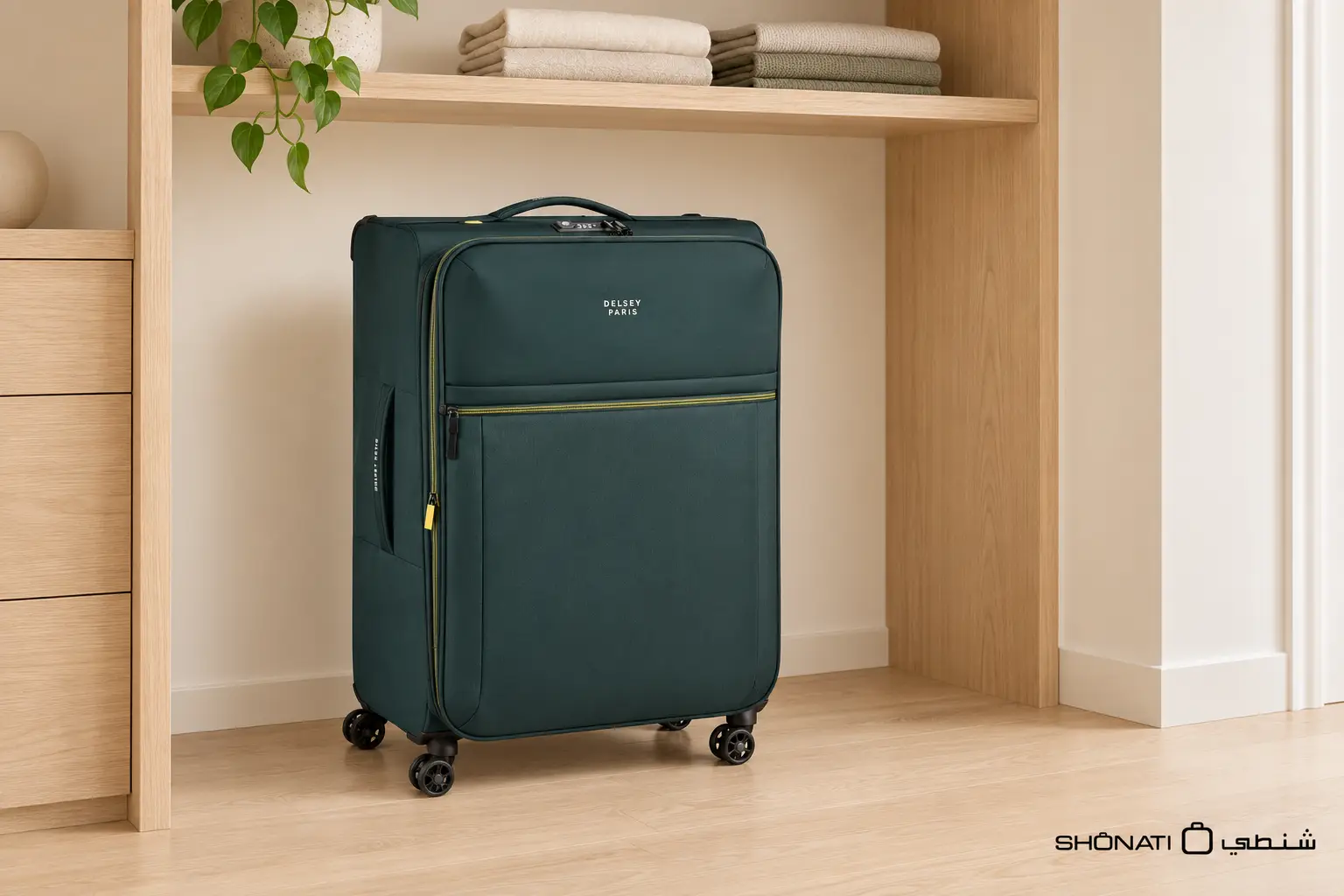
Can you store smaller suitcases inside larger ones?
Some collections are designed for nesting. it Luggage’s FAQ, for example, describes nesting different sizes within the same style range. Check the specific combination you own rather than assuming any cabin case fits any large suitcase.
Make sure both cases are clean and dry, and that wheels or fittings do not press into the lining. The outer case should close without force. For the buying decision, see our luggage set versus single suitcase guide.
A quick checklist before you put your suitcase away
- Every pocket is empty and checked.
- Loose dirt and cleaning residue have been removed as instructed.
- The shell, lining and pockets are completely dry.
- The wheels and handles have been checked for problems.
- The storage location follows the manufacturer’s guidance.
- Any nested cases fit without pressure.
Common suitcase-cleaning questions
Can you wash a whole suitcase in the washing machine?
Do not machine-wash a suitcase unless the manufacturer explicitly permits it. Permission to wash a removable lining or pocket does not extend to the shell, frame, wheels or handles.
Can you clean fabric luggage without soaking it?
Start by removing loose dust and dirt. For remaining marks, use the spot-cleaning method allowed by the care label. A light clean may be sufficient; a full wet wash is not an automatic requirement.
Is vinegar or alcohol safe for cleaning every suitcase?
No universal approval applies. Consult the instructions for the exact surface and model before using either. A recommendation for another brand, or for a different part of a case, is not enough.
How often should you clean your suitcase?
Inspect it after each trip and deal with spills and visible dirt appropriately. Match the amount of cleaning to its condition and care instructions rather than applying strong products on a fixed schedule.
Should a suitcase be stored open or closed?
Keep the normal compartments open while drying. Once fully dry, follow the manufacturer’s storage instructions for the case and cover. Leaving a zip open does not make a damp storage location suitable.
Looking for your model’s details? Start with its label and product information. If you purchased your case from SHONATI, keep the model code and purchase details handy when asking about the applicable care guidance.
Sources and how this guide was prepared
This guide draws on published manufacturer care instructions and SHONATI product specifications reviewed on 11 October 2026. The product examples identify different constructions; they are not a comparison of cleaning-test results. The instructions supplied with your exact model take priority over general guidance.