
Hard Shell vs Soft Shell Luggage: Which One Should You Choose?

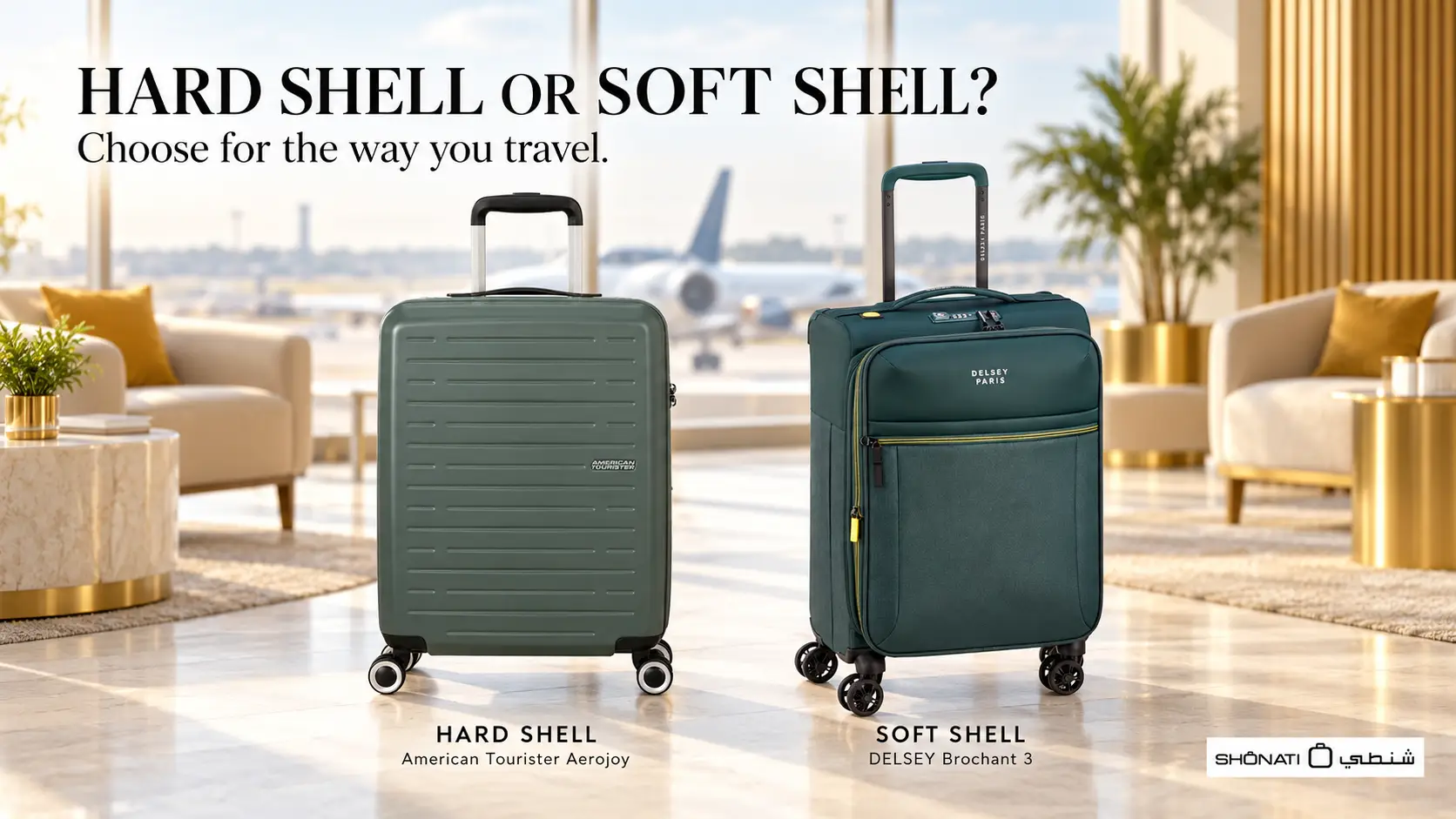
Choose hard shell luggage if you prefer a rigid exterior, structured packing and a surface that is usually easy to wipe clean. Choose soft shell luggage if quick-access pockets and a flexible packing layout matter more. Neither type wins every trip: compare the exact suitcase’s empty weight, opening design, components and packed dimensions before buying.
For travellers shopping in the UAE, the useful question is how the suitcase will work between home, the airport and the hotel. A neat-looking case can still be awkward to open in a small room; a flexible fabric bag can still exceed your airline’s limit once its pockets are full.
Hard shell vs soft shell luggage: a quick comparison
Hard shell, also called hardside, luggage has a rigid outer body. Soft shell, or softside, luggage uses fabric around a supporting structure. These labels describe construction; they do not tell you every feature the suitcase has.
| What matters | Hard shell luggage | Soft shell luggage |
|---|---|---|
| Packing structure | Rigid panels hold their shape; useful when you want a defined packing space. | Fabric can give around the contents, within the limits of its frame and seams. |
| External pressure | A rigid barrier can help shield contents, but fragile items still need cushioning. | Fabric gives under pressure; contents need careful positioning and padding. |
| Everyday wear | Scuffs, scratches, dents or cracks depend on the shell and the impact. | Stains, abrasion or tears depend on the fabric and the contact. |
| Quick access | Many have no outer pockets; front-access models are an exception. | External pockets are common, but their size and layout vary. |
| Opening space | A two-half opening is common; top-lid and front-opening designs also exist. | A deep main compartment with an opening lid is common; inspect the actual layout. |
| Expansion | Available on some models. | Available on some models. |
| Empty weight | Check the exact size and version; hard does not automatically mean heavy. | Check the exact size and version; fabric does not guarantee the lightest bag. |
| Rain and spills | A water-resistant shell does not make every zipper or seam waterproof. | Some fabrics have water-repellent treatments; whole-bag protection varies. |
| Cleaning | The outer surface is often straightforward to wipe down. | Fabric may need spot cleaning and time to dry. |
| Wheels, locks and repairs | These are model-specific choices. Check wheel layout, handle, closures, replacement parts and written warranty terms for either construction. | |
Sources for the comparison include Antler on weight and surface wear, Away on opening design, and Briggs & Riley on expansion, alongside the model and care references below.
These are buying tendencies, not promises of performance. Travelpro’s construction guide, for example, discusses both cushioning and possible water entry through zippers. Shell type alone cannot guarantee protection.
Choose the opening layout as carefully as the shell
Imagine arriving at a hotel and needing one clean shirt. Can you reach it while the case sits on the luggage rack, or must you lay both halves across the floor?
- Two-half opening: useful if you like separating clothes between compartments. Check how much room the open case occupies and whether both sides have dividers or straps.
- Deep base with a lid: useful if you prefer packing mainly into one compartment. Check the space needed for the lid and how easily you can reach items at the bottom.
- Separate front access: useful for items you want without opening the main compartment. Check the pocket’s actual size and whether filling it reduces space inside.
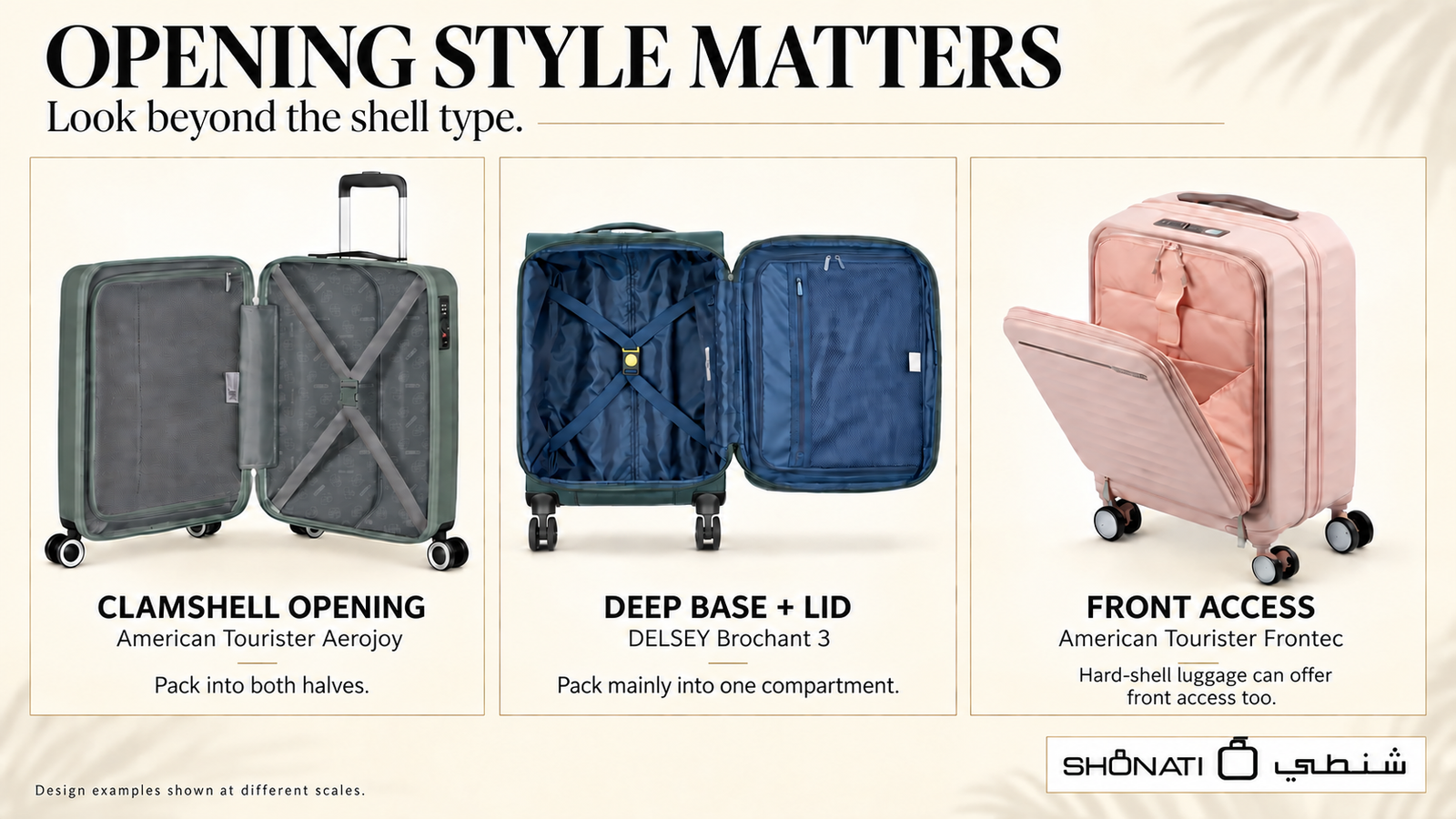
Compare how each suitcase opens: two halves, a deep main compartment with a lid, or a front-access panel. Opening layout varies by model.
These layouts do not map neatly to hard versus soft. Away’s Topside guide shows a polycarbonate case with a top lid. If room space or quick access is your main concern, open the exact model before deciding.
Which type suits your trip?
Carry-on trips with frequent access to essentials
Start with softside models if you want easily reached outer pockets for a charger, light layer or travel documents. A hard case with a dedicated front compartment can serve the same need. Check access with the bag packed: an empty display pocket can feel much more spacious than it does on departure day.
Your airline’s rules still come first. IATA explains that baggage allowances remain airline-specific. Measure the full packed exterior, including wheels, handles and filled pockets; expansion can change the depth. Use our cabin luggage measurement guide and airline cabin size guide alongside your booking’s current allowance.
Checked luggage for family holidays
Start with hard shell if you prefer a defined packing shape and an outer surface that is easy to clean. Start with soft shell if you prefer a deep compartment and flexible organisation. With either, inspect the corners, zipper operation, handles and wheels: the outside material is only one part of the bag.
Do not treat a hard shell as protective packaging for breakables. Wrap and immobilise fragile items, and keep valuable or irreplaceable belongings out of checked luggage. No ordinary suitcase makes careless packing harmless.
Small hotel rooms and trips with several stops
Prioritise opening space and access. A lid-opening case may be convenient when you unpack briefly each night; a divided case may suit you if you organise each half and fully unpack at your destination. Try the opening motion on a rack-sized surface before choosing either construction.
Road trips and shared car boots
Check the actual car space and how you will lift the loaded bag. A soft exterior can provide some give, but its frame, wheels and handle remain rigid. Compare usable dimensions and grab-handle placement instead of assuming a fabric suitcase will squeeze into any gap.
If you are still deciding between cabin, medium and large luggage, start with our luggage size guide. Size and shell construction solve different parts of the buying decision.
Real examples: compare the model, not just the label
These three models illustrate different design choices in the SHONATI catalogue. They are not a matched-capacity test or a ranking of overall quality. Ask us to confirm the available version, colour and size.
American Tourister Aerojoy 55: a hard-shell example
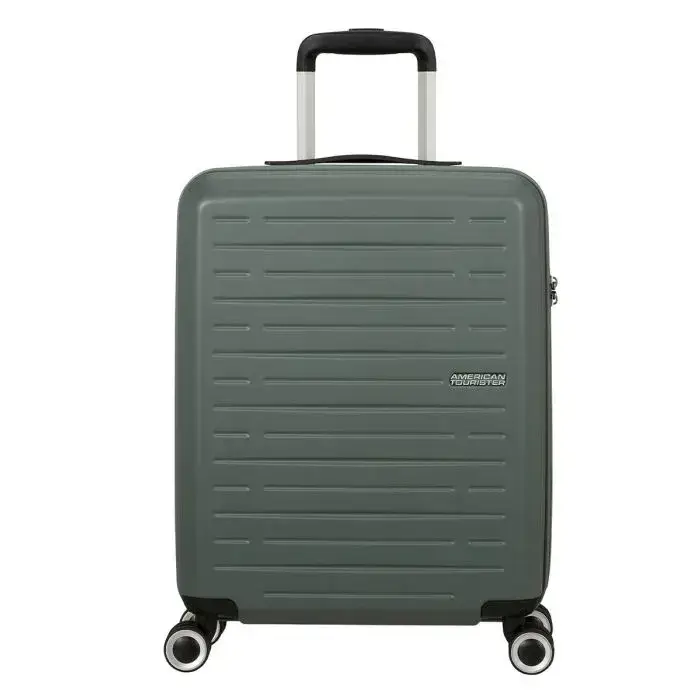
The Aerojoy 55 cabin suitcase is an ABS hard-shell option. American Tourister lists its empty weight as 2.6 kg. That is a useful starting figure for checking how much of your allowance remains for the contents.
DELSEY Brochant 3 55: a soft-shell example
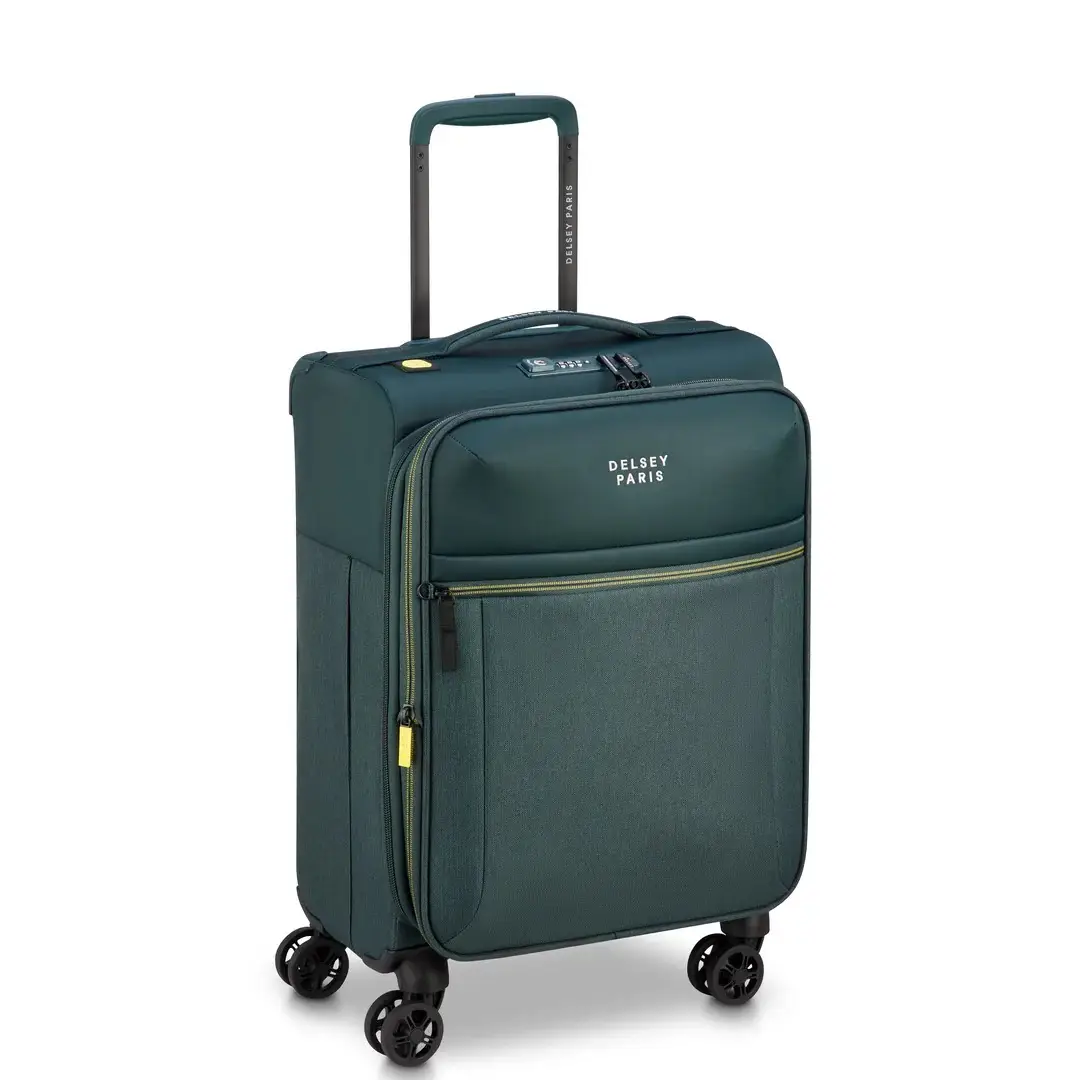
The Brochant 3 55 provides a textile alternative with an external pocket. DELSEY’s expandable 55 cm specification lists recycled polyester and expansion. It is a useful design to examine if fabric construction and accessible storage are priorities.
American Tourister Frontec 54: hard shell with front access
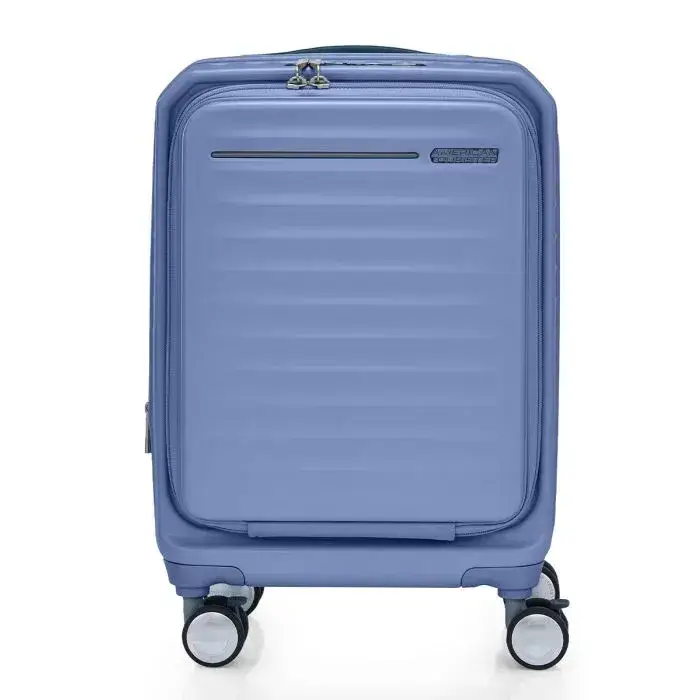
The Frontec 54 illustrates why hard shell does not mean a single opening style. American Tourister describes Frontec as front-opening hardside luggage with expansion. Compare the front access with a conventional split-opening case to see which suits your routine.
Turn empty weight into a packing budget
For a hypothetical 7 kg allowance assigned to one suitcase, a case weighing 2.6 kg leaves 4.4 kg for its contents: 7 − 2.6 = 4.4. An otherwise suitable case that weighs 0.5 kg less would leave 0.5 kg more for packing. This calculation is not an airline approval or a claim that either shell type is always lighter. Confirm whether your actual allowance combines multiple bags, and weigh everything that counts towards it.
Water resistance, cleaning and long-term ownership
A hard surface can be easy to wipe after a spill, while textile luggage may need more localised cleaning. Follow the care instructions for the exact finish and fabric. Samsonite’s care guide gives separate cleaning advice for hard and soft luggage; instructions from one brand should not automatically be applied to another.
For either type, check the whole construction before relying on a water-resistance claim. Zippers, seams and openings matter as well as the outer panel. Keep items that must stay dry in suitable protective inner packaging.
There is no useful universal lifespan for “hard luggage” or “soft luggage.” Before buying, ask what the written warranty covers, what it excludes, and how wheel, handle or zipper repairs are handled for that model. A longer headline warranty is not a substitute for reading its conditions.
A five-minute comparison before you buy
- Lift and weigh it. Compare the empty weight of the exact size. Check whether the side and top handles feel comfortable in your hand.
- Open it where you would use it. Try a rack-sized surface and check access to both compartments or the deep base.
- Check the pockets and expansion. Ask how the packed external dimensions change when you use them.
- Roll it and operate the handle. Check smooth movement, handle reach and whether anything catches. An empty showroom roll is not a loaded travel test.
- Read the details. Confirm the material, model code, care instructions, warranty conditions and current availability.
The right choice is the case whose trade-offs fit your routine. You may prefer hard shell for a checked holiday bag and soft shell for a short business trip, or the reverse. Let the opening layout, real specifications and your packing habits decide.
Hard shell vs soft shell luggage FAQs
Is hard or soft luggage better for international travel?
Either can work. Choose the construction and layout that suit your packing, then verify the airline’s size, weight and baggage-piece rules for the route and fare. “International travel” does not create one universal suitcase standard.
Is soft shell luggage always lighter?
No. Empty weight depends on the complete suitcase, including its size, frame, wheels, handle and features. Compare the manufacturer’s figures for the exact versions you are considering, then weigh the selected bag if possible.
Do hard shell suitcases crack?
They can, depending on the material, construction and impact. Soft luggage can also suffer tears or abrasion. Neither shell label establishes how long a particular bag will last.
Is hard shell luggage waterproof?
Do not assume so. A water-resistant outer panel does not establish waterproof performance for the zippers, seams and whole case. Check the manufacturer’s exact claim.
Can hard shell luggage expand?
Yes, some models can. For example, Briggs & Riley describes expansion in its hardside range. Expansion is a model feature, and the expanded bag must still meet any applicable baggage limits.
Does soft luggage fit more easily into a cabin sizer?
Fabric can have some give, but the frame and wheels do not disappear. Filled pockets and bulging panels can increase the packed dimensions. Buy and pack to the published limit rather than relying on compression or staff discretion.
Are wheels and locks different on hard and soft cases?
Check the model rather than the shell label. Softside cases can have spinner wheels and integrated locks too. For example, DELSEY’s expandable Brochant 3 cabin specification lists four double wheels and a TSA combination lock.
Compare hard and soft luggage at SHONATI Sharjah
Browse our hard shell luggage and soft shell luggage, then ask which sizes and colours are available for comparison at SHONATI Sharjah. Bring your airline allowance and tell us what you need to reach during the journey.
Check availability on WhatsApp
·
Find SHONATI Sharjah on Google Maps
Product specifications and cited sources checked on 9 September 2026. This guide uses manufacturer-published information and product listings; the examples are not results of SHONATI laboratory or long-term travel testing. Availability and product versions may change.